“The noontide of my life is starting, Which I must needs accept, I know; But oh, my light youth, if we're parting, I want you as a friend to go! My thanks to you for the enjoyments, The sadness and the pleasant torments, The hubbub, storms, festivity, For all that you have given me; My thanks to you. I have delighted In you when times were turbulent, When times were calm... to full extent; Enough now! With a soul clear-sighted I set out on another quest And from my old life take a rest. Let me glance back. Farewell, you arbours Where, in the backwoods, I recall Days filled with indolence and ardours And dreaming of a pensive soul. And you, my youthful inspiration, Keep stirring my imagination, My heart's inertia vivify, More often to my corner fly. Let not a poet's soul be frozen, Made rough and hard, reduced to bone And finally be turned to stone In that benumbing world he goes in, In that intoxicating slough Where, friends, we bathe together now.”
Quote by Alexander Pushkin
Book:Eugene Onegin
Work
Eugene Onegin
Eugene Onegin is a narrative poem written by Alexander Pushkin, combining elements of romance and satire. The story revolves around the protagonist, Eugene Onegin, and his complex relationships with Tatyana and Olga. The novel is celebrated for its innovative narrative technique and its exploration of themes such as love, jealousy, and social status. more
Author
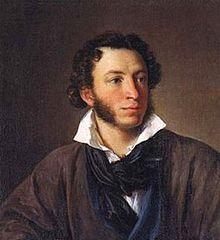
Alexander Pushkin
A great Russian poet and the founder of modern Russian literature. Born on June 6, 1799, and died on February 10, 1837. His poetry, novels, and plays have had a profound impact on Russian literature. more
You May Also Like
Source: Burr
“No one in the world is really over 28. I wish I had known that when I thought I was 40.”
Source: Eugene Onegin
Source: Nemesis
Source: Hunted
Source: Історія пані Ївги
Source: In a Dark Wood
Source: Snow Crash