Quotessence
Home / Quotes / Quote by Anthony Burgess

Quote by Anthony Burgess

“But, brothers, this biting of their toe-nails over what is the cause of badness is what turns me into a fine laughing malchick. They don't go into what is the cause of goodness, so why of the other shop? And I was patronizing the other shop.”

Quote by Anthony Burgess

Work

A Clockwork Orange

A novel set in a dystopian future where the protagonist, Alex, is a violent teenager. The story delves into the consequences of his actions and the societal implications of his transformation through an experimental conditioning procedure. more

Author

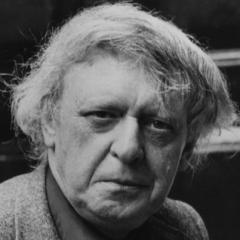
Anthony Burgess
Anthony Burgess

Anthony Burgess, born on February 25, 1917, in Manchester, England, was an accomplished British writer known for his distinctive literary style and profound insights into human psychology. His works spanned various literary genres, including novels, plays, and poetry. Burgess' most famous novel, A Clockwork Orange, is one of the most celebrated works of the 20th century, exploring themes such as free will, morality, and social control. more

You May Also Like

“Questions like “Is this normal?” or “Am I weird?” reveal how deeply the concept of being “normal” is embedded in the subconscious of the ordinary majority. They don’t mean “Is this ordinary?” or “Am I a product of a photocopy?” when they ask these things, of course. In fact, they are not even consciously trying to conform to norms, even if their words might suggest otherwise. It is simply that they have internalized the association of the word “normal” with the idea of “good.”

“People living under a selfish system become adjusted to it in order to survive. They therefore naturally acquire a personal selfishness and just as naturally assume this same selfishness exists in all others, including the organizer. This ingrained suspicion must be destroyed; its destruction of it is an essential part of the fight for a people’s world. Not only must the dignity of the individual be restored but in that process man must begin to see the good in other men. He cannot see the good in others unless he has some of it within himself.”

“[The Old Astronomer to His Pupil] Reach me down my Tycho Brahe, I would know him when we meet, When I share my later science, sitting humbly at his feet; He may know the law of all things, yet be ignorant of how We are working to completion, working on from then to now. Pray remember that I leave you all my theory complete, Lacking only certain data for your adding, as is meet, And remember men will scorn it, 'tis original and true, And the obloquy of newness may fall bitterly on you. But, my pupil, as my pupil you have learned the worth of scorn, You have laughed with me at pity, we have joyed to be forlorn, What for us are all distractions of men's fellowship and smiles; What for us the Goddess Pleasure with her meretricious smiles. You may tell that German College that their honor comes too late, But they must not waste repentance on the grizzly savant's fate. Though my soul may set in darkness, it will rise in perfect light; I have loved the stars too fondly to be fearful of the night. What, my boy, you are not weeping? You should save your eyes for sight; You will need them, mine observer, yet for many another night. I leave none but you, my pupil, unto whom my plans are known. You 'have none but me,' you murmur, and I 'leave you quite alone'? Well then, kiss me, -- since my mother left her blessing on my brow, There has been a something wanting in my nature until now; I can dimly comprehend it, -- that I might have been more kind, Might have cherished you more wisely, as the one I leave behind. I 'have never failed in kindness'? No, we lived too high for strife,-- Calmest coldness was the error which has crept into our life; But your spirit is untainted, I can dedicate you still To the service of our science: you will further it? you will! There are certain calculations I should like to make with you, To be sure that your deductions will be logical and true; And remember, 'Patience, Patience,' is the watchword of a sage, Not to-day nor yet to-morrow can complete a perfect age. I have sown, like Tycho Brahe, that a greater man may reap; But if none should do my reaping, 'twill disturb me in my sleep So be careful and be faithful, though, like me, you leave no name; See, my boy, that nothing turn you to the mere pursuit of fame. I must say Good-bye, my pupil, for I cannot longer speak; Draw the curtain back for Venus, ere my vision grows too weak: It is strange the pearly planet should look red as fiery Mars,-- God will mercifully guide me on my way amongst the stars.”

“Reframe Your Past as a Teacher, Not a Prison. Seraphina used her painful memories as a strategic map. Do not let your history define you as a victim; let it educate you. Philosophy: What we learn from suffering can become wisdom – the alchemy that turns lead into gold.”