Quotessence
Home / Quotes / Quote by Charles Eisenstein

Quote by Charles Eisenstein

“You could conceive spirituality as the study of the immeasurable, of the qualitative. But that's very different from the way we typically use the word. A spiritual person, in the popular conception, is somebody who's kind of aloof from the world, introspective, meditating, communing with non-material beings. That's the spiritual realm, and we elevate it above the material realm. What's more worthy, what's more admirable? Who's the one who has done this hard work on the self, and has done a lot of "practice"? That's the spiritual person.”

Quote by Charles Eisenstein

Author
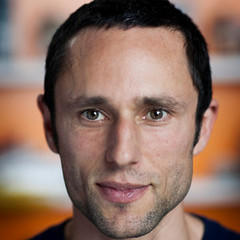
Charles Eisenstein
Charles Eisenstein

Charles Eisenstein is an American author known for his profound insights into economic, cultural, and social issues. His work explores the relationship between money, debt, economic growth, and human consciousness, challenging the modern economic system. more

You May Also Like

“Even if we profess to be non-judgmental, there's an inherent judgmentality and hierarchy in which the spiritual person, the conscious person, the mindful person, is more developed than the typical truck driver or waitress or heroin addict. This is a red flag, another problem built into the concept of spirituality. The truth is that every person you meet is in some way more developed than you are, and that the multiple modes of development that a human being can pursue require the whole of humanity to pursue. We're in this together. Enlightenment is a collective effort.”

“I'll start with where we are right now. The map that I'll use is this birthing process, this kind of profound transition that we're going through, where the old narratives, the old story, the old mythology is wearing thin, beginning to fall apart. And as it does so, people hold on to it even more tightly. They haven't let go and won't let go until it becomes simply impossible to hold on to it anymore. And we're nearing that time, but not yet. Right now you can still pretend everything's normal, even though it's greatly hollowed out.”

“Narratives that were taken for granted when I was a kid are still there, but they don't have the same depth and fervor anymore. Even the makers of the propaganda don't fully believe the propaganda. The surface structures are more frozen than they ever were, but the core is hollowing out, and it's becoming very fragile. People don't believe in the system anymore. But they're still going along with it because, one, they don't know what else is possible, they don't even know anything else is possible. Secondly, everybody else is doing it. So they go through the motions.”

“I think people become environmentalists through experiences of beauty and grief. There was that pond that you visited when you were a child, and there were frogs and turtles. You go back there and it's dead now. The forest you went to, now there are bulldozers, now it's a strip mall. These experiences of beauty followed by grief affect us more than learning that CO2 levels are now 400 parts per million.”

“We have to create conditions where people feel safe to feel and to care. That goes against a lot of our programming about how to make something change in the world. Sometimes you can pressure people into changing, you can force them, but the powers-that-be have more force than we do. I don't think we're going to win in a contest of force. I think we need to induce a change of heart. The narrative of "us versus them" is ultimately part of the problem. Traditional activism, which is about overcoming the latest bad guy, isn't deep enough. It just brings us another version of the same.”

“We can't change the fossil fuel companies' behavior in isolation from the rest of the industrial system. As long as they have customers, they're going to continue to operate, whether or not we divest of their stock. However, divesting might be helpful in terms of disrupting the story that what these companies do is perfectly okay. This situation differs from apartheid in a key regard though: racial equality in South Africa was no threat whatsoever to capitalism as we know it. Ending the fossil fuel era is a much deeper change.”

“Even if I had money to invest I wouldn't invest it in oil companies - - or their bankers, suppliers, customers ... really that means the whole stock market. I'm not opposed to divestment, but I think by itself it won't get very far. The demand is still there, the fossil fuel infrastructure is still there. Where I would like to see our political energy go is to stop ecocide on a local and bioregional level. Each new energy project involves horrible abuse of mountaintops, groundwater, forests, etc., because all the easy resources have already been extracted.”

“Are you going to divest in the banks and pension funds? Plenty of people are willing to invest in stock of those companies. You can argue that when a lot of people divest, it makes the stock price artificially low, which makes their price-to-earnings ratio more favorable, which makes it a better investment for the people who don't give a damn - - and is it really going to change corporate behavior? It begins to create a climate of antagonistic opinion, the result might be that the corporate executives will retreat even more into their own selfjustifying narratives.”

“I am certainly not proposing that we wait passively for the people in power to change their minds. I think we need to be confrontational, to expose the truth in ways that are uncomfortable and that, yes, require courage. What I caution against is using hateful rhetoric to inspire action, and I see a lot of that today. We strengthen the underlying field of hatred, dehumanization, and conquest. It certainly doesn't engage what allows people to do courageous things and to commit deeply, which is the experience of beauty, love, grief.”