Quotessence
Home / Quotes / Quote by Karl Pearson

Quote by Karl Pearson

Work

The Grammar of Science

This book delves into the foundational elements of scientific discourse, exploring the syntax, vocabulary, and conventions that shape scientific writing and communication. It provides insights into the construction of scientific arguments, the use of evidence, and the presentation of research findings. The Grammar of Science is intended for students, researchers, and anyone interested in understanding the language of science. more

Author
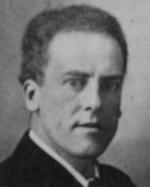
Karl Pearson
Karl Pearson

Karl Pearson, born on March 27, 1857 and died on April 27, 1936, was a renowned British mathematician and statistician, often hailed as one of the founders of modern statistics. He made significant contributions to the fields of statistics, biometry, and genetics, particularly in the development of concepts and methods such as correlation coefficients, regression analysis, and hypothesis testing. more

You May Also Like

“Is it a fact-or have I dreamt it-that, by means of electricity, the world of matter has become a great nerve, vibrating thousands of miles in a breathless point of time?”

“Most people like to believe something is or is not true. Great scientists tolerate ambiguity very well. They believe the theory enough to go ahead; they doubt it enough to notice the errors and faults so they can step forward and create the new replacement theory. If you believe too much you'll never notice the flaws; if you doubt too much you won't get started. It requires a lovely balance.”

“The first [quality] to be named must always be the power of attention, of giving one's whole mind to the patient without the interposition of anything of oneself. It sounds simple but only the very greatest doctors ever fully attain it. ... The second thing to be striven for is intuition. This sounds an impossibility, for who can control that small quiet monitor? But intuition is only interference from experience stored and not actively recalled. ... The last aptitude I shall mention that must be attained by the good physician is that of handling the sick man's mind.”

“The technologies which have had the most profound effects on human life are usually simple. A good example of a simple technology with profound historical consequences is hay. ... It was hay that allowed populations to grow and civilizations to flourish among the forests of Northern Europe. Hay moved the greatness of Rome to Paris and London, and later to Berlin and Moscow and New York.”

“There are some men who are counted great because they represent the actuality of their own age, and mirror it as it is. Such an one was Voltaire, of whom it was epigrammatically said: "he expressed everybody's thoughts better than anyone." But there are other men who attain greatness because they embody the potentiality of their own day and magically reflect the future. They express the thoughts which will be everybody's two or three centuries after them. Such as one was Descartes.”