Quotessence
Home / Quotes / Quote by Dean Koontz

Quote by Dean Koontz

“She stared out at the gloaming and didn't care that it might be the last twilight she ever saw. She cared only that she had spent too much of her twenty-six years alone, with no one at her side to share the sunsets, the starry skies, the turbulent beauty of storm clouds. She wished that she had reached out to people more, instead of retreating inward, wished that she had not made her heart into a sheltering closet. Now, when nothing mattered any more, when the insight couldn't do her any damn good at all, she realized that there was less hope of survival alone than with others. She'd been acutely aware that terror, betrayal, and cruelty had a human face, but she had not sufficiently appreciated that courage, kindness, and love had a human face as well. Hope wasn't a cottage industry; it was neither a product that she could manufacture like needlepoint samplers nor a substance that she could secrete, in her cautious solitude, like a maple tree producing the essence of syrup. Hope was to be found in other people, by reaching out, by taking risks, by opening her fortress heart.”

Quote by Dean Koontz

Work

Intensity

Browse quotes and source details for this work. more

Author

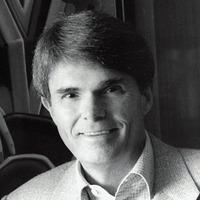
Dean Koontz
Dean Koontz

Renowned American author known for his suspense and horror novels. He has been writing since the 1970s and his works have been widely popular, winning numerous international awards. more

You May Also Like

“He wondered what would happen if he abandoned the spinster’s offer of marriage, if he could make the story’s denouement true to the strange, nuanced, open-ended and infinitely interesting life he was sharing now with Constance Fenimore Woolson, if he could make his adventurer begin to need, or half-need, the domestic life of a lodger with an intelligent and reserved woman who was lonely, but not willing to be preyed upon. She would ask him for nothing as obvious as marriage; what she wanted was a close and satisfying and, if necessary, unconventional attachment with loyalty and care and affection as well as solitude and distance.”

“Writing is no more than wending a way in an attempt to restore all of the paths that had been cut-short, headed off at the pass, de-railed, even if worded byways are more dangerous than wooded paths, even if the way of writing is ill-lit, and most of all braced by the uncertainty of solitary passage.”

“Et garde-toi des bons et des justes ! Ils aiment à crucifier ceux qui s’inventent leur propre vertu, — ils haïssent le solitaire. Garde-toi aussi de la sainte innocence ! Tout ce qui n'est pas simple lui est impie ; elle aime aussi à jouer avec le feu... des bûchers. Et garde-toi des accès de ton amour ! Trop vite le solitaire tend la main à celui qu’il rencontre. Il y a des hommes à qui tu ne dois pas donner la main, mais seulement la patte : et je veux que ta patte ait aussi des griffes. Mais le plus dangereux ennemi que tu puisses rencontrer sera toujours toi-même ; c’est toi-même que tu guettes dans les cavernes et les forêts. Solitaire, tu suis le chemin qui mène à toi-même !”

“Regarding the straying of the dwelling place, it is generally taught that in order to perfect ultimate realization of the view someone who has a temporary realization of it should go to a secluded open area, such as a mountain retreat or a charnel ground. You may temporarily possess the view, but in order to sustain it, you must stay in mountain hermitages. An unwholesome dwelling place may indeed cause your view to go astray.”

“The artist or writer does not impose harmony on reality but—with sufficient reverence and diligence and selflessness and solitude—uncovers the harmony that is always there but that we conceal from ourselves out of a preferencia for material comfort and fear of the consequences a full and unreserved embrace of harmony requires. This faith in the underlying harmony roots itself in a love of and appreciation for nature, because nature, no matter how extreme the human abuse heaped on her, embodies a quiet, continual knitting and healing of life, ever dependent on death to make herself anew. 'Art is a harmony parallel to nature,' Cézanne wrote—not identical with but parallel to nature. Art of any kind, undertaken with atención and focus and as part of a commitment to discipline, is an effort at reenactment of the original creative gesture—the precipitation of the universe at the moment of its creation. That, I believe, is why we sing, paint, dance, sculpt, write; that is why cualquier one of us sets out to create something from nothing, and why the creative impulse is essentially religious or, if you prefer, spiritual. We seek to recreate the original creative gesture, whatever or whoever set it in motion—the bringing into being of what is. We seek the center of beauty.”