“My friends are much more dangerous than my enemies. These latter - with infinite subtlety - spin webs to keep me out of places where I hate to go, - and tell stories of me to people whom it would be vanity and vexation to meet; - and they help me so much by their unconscious aid that I almost love them.”
Quote by Lafcadio Hearn
Work
The Life and Letters of Lafcadio Hearn Including the Japanese Letters
The Life and Letters of Lafcadio Hearn Including the Japanese Letters is a compilation of correspondence and personal essays by Lafcadio Hearn, a Greek-born American writer and critic. The book provides a detailed look into Hearn's life, particularly his time spent in Japan, where he became a prominent figure in the study of Japanese culture. The letters and essays reflect his deep engagement with the Japanese language, literature, and society, offering readers a unique perspective on the cultural exchange between East and West during the late 19th and early 20th centuries. more
Author
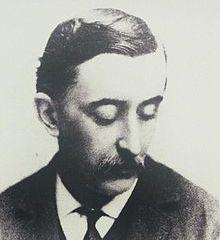
Lafcadio Hearn
Lafcadio Hearn, born on June 27, 1850, and died on September 26, 1904, was a renowned writer. His works spanned various fields such as literature, folklore, and travel literature, known for his unique perspective and profound insights. more
You May Also Like
Source: The Protestant ethic and the spirit of capitalism
“It is the glory of God to conceal a thing: but the honour of kings is to search out a matter.”
“If you can sense the corruption in me, it is ... because there's a dose of it in you.”
Source: The Rector of Justin
Source: The Rector of Justin