“The mental disease of the present generation is impatience of study, contempt of the great masters of ancient wisdom, and a disposition to rely wholly upon unassisted genius and natural sagacity. The wits of these happy days have discovered a way to fame, which the dull caution of our laborious ancestors durst never attempt; they cut the knots of sophistry, which it was formerly the business of years to untie, solve difficulties by sudden irradiations of intelligence, and comprehend long processes of argument by immediate intuition.”
Quote by Samuel Johnson
Work
The Works of Samuel Johnson, LL. D.: With an Essay on His Life and Genius /c by Arthur Murphy, Esq
This volume presents a compilation of Samuel Johnson's literary contributions, including poetry, prose, and criticism, alongside an insightful essay by Arthur Murphy that explores Johnson's personal and intellectual achievements. more
Author
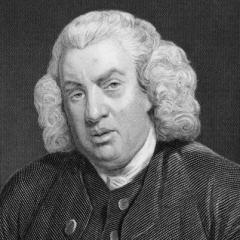
Samuel Johnson
Samuel Johnson was an English writer, poet, and lexicographer, renowned for his comprehensive English dictionary, 'A Dictionary of the English Language', published in 1755. His distinctive writing style and wit have cemented his place as a significant figure in the history of English literature. more
You May Also Like
Source: The Works of Samuel Johnson: LL.D. A New Edition in Twelve Volumes. With an Essay on His Life and Genius, by Arthur Murphy, Esq
Source: The Rambler
Source: The Rambler: A Periodical Paper, Published in 1750, 1751, 1752
Source: The Rambler: In Four Volumes..
Source: The Works of Samuel Johnson...
“Know that the thing that is easiest to do is rarely the thing that is best to do.”
“For God hates utterly the bray of bragging tongues.”
Source: The Antigone of Sophocles: An English Version by Dudley Fitts and Robert Fitzgerald
“Few moments in life are more gratifying than those when the arrogant are exposed as the ignorant.”