Quotessence
Home / Quotes / Quote by William O. Douglas

Quote by William O. Douglas

“But our society - unlike most in the world - presupposes that freedom and liberty are in a frame of reference that makes the individual, not government, the keeper of his tastes, beliefs, and ideas. That is the philosophy of the First Amendment; and it is this article of faith that sets us apart from most nations in the world.”

Quote by William O. Douglas

Author
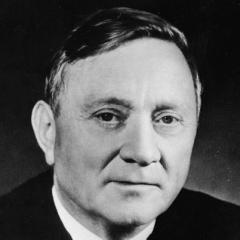
William O. Douglas
William O. Douglas

William O. Douglas was a former Associate Justice of the Supreme Court of the United States. Born on October 16, 1898, and passing away on January 19, 1980, he is renowned for his contributions to constitutional interpretation. During his tenure on the Supreme Court, Douglas advocated for liberal judgments, particularly in the areas of the First and Fifth Amendments, and had a profound impact on the American legal and judicial system. more

You May Also Like

“Forced to choose, the poor, like the rich, love money more than political liberty; and the only political freedom capable of enduring is one that is so pruned as to keep the rich from denuding the poor by ability or subtlety and the poor from robbing the rich by violence or votes.”

“No human government has a right to enquire into private opinions, to presume that it knows them, or to act on that presumption. Men are the best judges of the consequences of their own opinions, and how far they are likely to influence their actions; and it is most unnatural and tyrannical to say, "as you think, so must you act. I will collect the evidence of your future conduct from what I know to be your opinions."”

“To vest a few fallible men — prosecutors, judges, jurors — with vast powers of literary or artistic censorship, to convert them into what J. S. Mill called a "moral police," is to make them despotic arbiters of literary products. If one day they ban mediocre books as obscene, another day they may do likewise to a work of genius.”

“The Fed was largely responsible for converting what might have been a garden-variety recession, although perhaps a fairly severe one, into a major catastrophe. Instead of using its powers to offset the depression, it presided over a decline in the quantity of money by one-third from 1929 to 1933 ... Far from the depression being a failure of the free-enterprise system, it was a tragic failure of government.”

“If, for example, existing government intervention is minor, we shall attach a smaller weight to the negative effect of additional government intervention. This is an important reason why many earlier liberals, like Henry Simons, writing at a time when government was small by today's standards, were willing to have government undertake activities that today's liberals would not accept now that government has become so overgrown.”