Quotessence
Home / Quotes / Quote by Larry Gelbart

Quote by Larry Gelbart

“I love to play with language; make it do tricks, turn a word inside out to see if it's got a hidden meaning tucked away somewhere, or perhaps find that it's capable of an extra entendre or two. . . . Plotting is nothing I did, or do, naturally. It is the hardest part of the writing process. No matter how many times you plot a script successfully, the next one, representing new and uncharted territory, convinces you that you really don't know how to do it at all.”

Quote by Larry Gelbart

Author
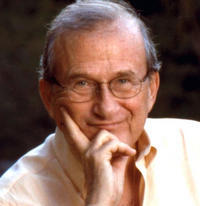
Larry Gelbart
Larry Gelbart

Larry Gelbart, an American television writer, was born on February 25, 1928, and passed away on September 11, 2009. Known for his unique sense of humor and profound social insight, Gelbart contributed scripts to several classic television shows, including 'M*A*S*H' and 'The New Adventures of Old Christine'. His work is celebrated for its sharp wit and insightful commentary on societal issues, having a significant impact on screenwriters that followed. more

You May Also Like

“I believe you shouldn't force the audience's interpretation of a character or a story. The more you explain things, the less intriguing and imaginable they are for viewers. . . . Film to me, in its essence, in its ultimate nature, is silent. Music and dialogue are there to fill what is lacking in the image. But you should be able to tell the story with moving pictures alone. For my next project, though, I'd like to make the kind of film where the characters blabber all the time.”

“The title's so upfront. It gives fair warning about the play's content. I'm writing about a kind of disenchantment, an anger, but quite a cool 90's anger, at a time when we're not very good at openly being angry. . . . I don't think I ever thought the title was titillating. I thought it was incredibly catchy. If the play is about the reduction in human relations down to a consumerist rationale, then thematically, the title is entirely linked into the thesis of the play.”

“[Action's] a Western thing. We think of the hero going into battle, rebelling against a government or an oppressor, but [in KUNDUN] action is nonaction or what appears to be nonaction. That's a hard concept for Western audiences. . . . We wanted to show a kind of moral action, a spiritual action, an emotional action. Some people will pick up on it; some won't.”