Quotessence
Home / Quotes / Quote by Winston Churchill

Quote by Winston Churchill

Work

War Speeches: From September 11, 1943 to August 16, 1945

This volume compiles a selection of significant speeches made between September 11, 1943, and August 16, 1945, capturing the political and emotional landscape of the war. more

Author
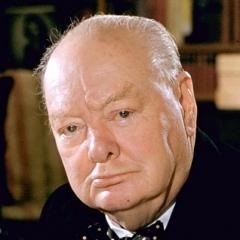
Winston Churchill
Winston Churchill

Winston Churchill, a former Prime Minister of the United Kingdom, was a statesman, historian, writer, and orator. He led the British people in resisting Nazi Germany during World War II and became a national hero. Churchill is renowned for his unique oratory style and steadfast political stance. more

You May Also Like

“Generally the officers of the army were indifferent whether the annexation [of Texas] was consummated or not; but not so all of them. For myself, I was bitterly opposed to the measure, and to this day regard the war, which resulted, as one of the most unjust ever waged by a stronger against a weaker nation. It was an instance of a republic following the bad example of European monarchies, in not considering justice in their desire to acquire additional territory.”

“In a 91-part series of sob stories from the laid off and the disgruntled, The NY Times is in the midst of bemoaning 'the downsizing of America' - better known as 'the whining of America.' The cause of all the heartache, in the esteemed newspaper of record's view, appears to be heartless corporate chieftains - as well as capitalism itself. Americans are moving forward, despite shackles. The shackles I am referring to are not NAFTA, not corporations. They are, instead, the barriers imposed by our own government.”

“By patience and determination, rather than by a harsh upsetting of tradition, we move toward our national aspirations.... This is the way we get things done in America. One man tells another, does what he can, till the sum of these efforts grows into a national aspiration-a precious goal. Then occurs our miracle of democracy: because the groundwork has been surely laid, the goal is already within our grasp.”

“The Kennedy Administration's public pronouncements on the matter suggested that the presence of Soviet nuclear missiles in Castro's Cuba would represent an unacceptable strategic threat to the United States. . . . This urgent transformation of Cuba into an important strategic base - by the presence of these large, long-range, and clearly offensive weapons of sudden mass-destruction - constitutes an explicit threat to the peace and security of all the Americas. . . .”