“As in some Irish houses, where things are so-so, One gammon of bacon hangs up for a show; But, for eating a rasher of what they take pride in, They'd as soon think of eating the pan it is fried in.”
Quote by Oliver Goldsmith
Work
The miscellaneous works of Oliver Goldsmith
This volume includes a selection of Oliver Goldsmith's literary works, showcasing his versatility as a writer across various genres. The collection features essays on moral and social issues, poems that reflect on nature and human emotions, and plays that explore themes of wit and satire. more
Author
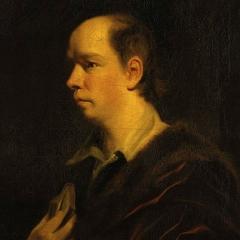
Oliver Goldsmith
Oliver Goldsmith was an Irish novelist, playwright, poet, and physician. He is best known for his novel 'The Vicar of Wakefield' and his plays 'She Stoops to Conquer' and 'The Good-Natur'd Man'. Goldsmith's works are characterized by their wit, humor, and moral depth. more
You May Also Like
Source: The Miscellaneous Works of Oliver Goldsmith: With an Account of His Life and Writings : Stereotyped from the Paris Edition : Complete in One Volume
Source: The works of Oliver Goldsmith: Vicar of Wakefield, select poems and comedies, with intr., notes and a life by J.F. Waller
Source: The miscellaneous works of Oliver Goldsmith
“We are all sure of two things, at least; we shall suffer and we shall all die.”
Source: Miscellaneous Works: To which is Prefixed Some Account of His Life and Writings
Source: The works of Oliver Goldsmith. 2: Enquiry into the present state of polite learning; The citizen of the world
Source: The Works of Oliver Goldsmith: The bee. Essays. Unacknowledged essays. Prefaces, introductions, etc
“It world be well had we more misers than we have among us.”
Source: Letters from a citizen of the world (concluded). The Bee, a select collection of essays, on the most interesting and entertaining subjects