“But nothing is more estimable than a physician who, having studied nature from his youth, knows the properties of the human body, the diseases which assail it, the remedies which will benefit it, exercises his art with caution, and pays equal attention to the rich and the poor.”
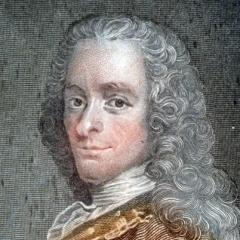
Quote by Voltaire
Work
Voltaire – The Philosophical Works: Treatise On Tolerance, Philosophical Dictionary, Candide, Letters on England, Plato’s Dream, Dialogues, The Study of Nature, Ancient Faith and Fable, Zadig…: From the French writer, historian and philosopher, famous for his wit, his attacks on the established Catholic Church, and his advocacy of freedom of religion and freedom of expression
This compilation includes Voltaire's seminal essays on tolerance, his philosophical dictionary, the satirical novel Candide, and letters reflecting on English society. It also features dialogues, explorations of nature, and critical examinations of ancient faiths and fables. Voltaire's works are celebrated for their wit and criticism of the Catholic Church, as well as his defense of religious and expressive freedoms. more
Author
You May Also Like
Source: Alfred, Lord Tennyson: Selected Poetry: A Broadview Anthology of British Literature Edition
“Young men should prove theorems, old men should write books.”