Quotessence
Home / Quotes / Quote by Audre Lorde

Quote by Audre Lorde

“As women, we have been taught either to ignore our differences, or to view them as causes for separation and suspicion rather than as forces for change. Without community there is no liberation, only the most vulnerable and temporary armistice between an individual and her oppression. But community must not mean a shedding of our differences, nor the pathetic pretense that these differences do not exist.”

Quote by Audre Lorde

Work

Sister Outsider: Essays and Speeches

Sister Outsider is a compilation of essays and speeches by Audre Lorde, a prominent African American poet and civil rights activist. The book delves into the complexities of race, gender, and identity, offering a profound and personal perspective on these issues. Lorde's work is characterized by its powerful and poetic language, as she shares her experiences and insights on the challenges faced by marginalized communities. more

Author
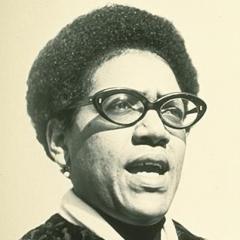
Audre Lorde
Audre Lorde

Audre Lorde, an American writer, poet, and speaker, was born on February 18, 1934, and passed away on November 17, 1992. Known for her profound insights into race, gender, and sexual orientation, her work encompasses poetry, prose, and novels, which have had a profound impact on contemporary literature and social movements. more

You May Also Like

“India’s success in building a modern state that defied predictions of its demise derived from its thorough insistence on institutionalizing what was Mahatma Gandhi’s greatest bequest to the freedom movement: the construction of a new Indian nation, not by suppressing its many particularities but by incorporating them into a new composite identity that preserved in “marble-cake” fashion all its constituent diversities across ethnic, religious, and racial lines. These diversities, far from being obliterated, acquired salience depending on context but, being enmeshed and free-flowing, they erased the boundaries between the insular and national identities, congealing the latter even as they preserved the former. The modern Indian polity, therefore, emerged not as a nation-state since, given its myriad diversities, it could not be so—but rather as a nations-state. Under the rubric of “unity in diversity,” its different ethnic, religious, and racial groups combined to create a novel, multilayered political identity. However confusing that reality may be to the outside world, it is authentically and indisputably Indian.”

“India’s post-independence leadership eschewed parochial nationalism in favor of civic nationalism where the rights and privileges of being Indian were conceived as arising not from some pre-existent modes of belonging—religion, race, or ethnicity—but instead from participation in a collective political endeavor.”

“The affirmation that Indian democracy would be founded entirely on a shared citizenship centered on upholding liberal principles and participatory institutions rather than religion, race, or ethnicity ensured that the many particularities that might have otherwise divided India were in one fell swoop deprived of any fundamental political meaning. This did not imply that the particularities themselves ceased to exist or that they ceased to provoke contention. Rather, they simply ceased to be privileged attributes that endowed their possessors with either greater rights or natural claims on power.”

“President Bush, whose early affirmation of the need for the [Smithsonian National Museum of African American History and Culture] to have a home on the National Mall was significant, and the first lady were genuinely interested and soon became invested in the success of the museum. President Bush had placed African Americans like Colin Powell and Condoleeza Rice in sensitive senior positions that had been unobtainable in earlier administrations. And he genuinely hoped that his actions might address the problem of the lack of diversity within the Republican Party. I also believe, whether directly or indirectly, that the destruction that accompanied Hurricane Katrina, the high percentage of African Americans who perished as a result of the storm and the inadequate response by his administration, informed his attitudes towards the museum.”

“Nothing about parenting Shiv is simple, because we're this at once recognizable yet totally unfamiliar amalgam of a twenty-first-century family: white mom, brown mom, black son. We push a lot of cultural buttons[...] We draw attention without trying to, and the world doesn't always know what to do with us. We are still a novelty for most of the people we encounter, and almost everywhere we go, one of us or all of us are in the minority. [...] There is a consciousness about our family's visibility, what it means, how our choices will be judged, and, on top of that, the extra consciousness of trying not to let that factor into our decisions too much.”