Quotessence
Home / Quotes / Quote by Wolfgang Pauli

Quote by Wolfgang Pauli

“As I regard physics and psychology as complementary types of examination, I am certain that there is an equally valid way that must lead the psychologist 'from behind' (namely, through investigating the archetypes) into the world of physics. As an example of background physics, I shall discuss a motif that occurs regularly in my dreams - namely, fine structure, in particular doublet structure of spectral lines and the separation of a chemical element into two isotopes.”

Quote by Wolfgang Pauli

Work

Atom and Archetype: The Pauli/Jung Letters 1932-58

Browse quotes and source details for this work. more

Author
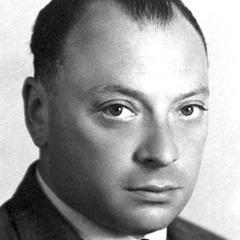
Wolfgang Pauli
Wolfgang Pauli

Wolfgang Pauli was a distinguished physicist born on April 25, 1900, and died on December 15, 1958. He is recognized for his substantial contributions to quantum mechanics, especially for the formulation of the Pauli exclusion principle. Pauli was awarded the Nobel Prize in Physics in 1945 for his work on the explanation of the fine structure of atomic spectra. more

You May Also Like

“At his "World of Physics" Web site, Eric W. Weisstein notes that the fine structure constant continues to fascinate numerologists, who have claimed that connections exist between alpha, the Cheops pyramid, and Stonehenge!”

“QED [quantum electrodynamics] reduces ... "all of chemistry and most of physics," to one basic interaction, the fundamental coupling of a photon to electric charge. The strength of this coupling remains, however, as a pure number, the so-called fine-structure constant, which is a parameter of QED that QED itself is powerless to predict.”

“Here the attention of the research workers is primarily directed to the problem of reconciling the claims of the special relativity theory with those of the quantum theory. The extraordinary advances made in this field by Dirac ... leave open the question whether it will be possible to satisfy the claims of the two theories without at the same time determining the Sommerfeld fine-structure constant.”

“We can measure the fine structure constant with very great precision, but so far none of our theories has provided an explanation of its measured value. One of the aims of superstring theory is to predict this quantity precisely. Any theory that could do that would be taken very seriously indeed as a potential 'Theory of Everything'.”

“The focus of history and philosophy of science scholar Arthur Miller’s (2010) "137: Jung and Pauli and the Pursuit of Scientific Obsession" is Jung and Pauli’s mutual effort to discover the cosmic number or fine structure constant, which is a fundamental physical constant dealing with electromagnetism, or, from a different perspective, could be considered the philosopher’s stone of the mathematical universe. This was indeed one of Pauli and Jung’s collaborative passions, but it was not the only concentration of their relationship. Quantum physics could be seen as the natural progression from ancient alchemy, through chemistry, culminating in the abstract world of subatomic particles, wave functions, and mathematics. [Ancient Egypt and Modern Psychotherapy]”

“The theoretical determination of the fine structure constant is certainly the most important of the unsolved problems of modern physics. We believe that any regression to the ideas of classical physics (as, for instance, to the use of the classical field concept)cannot bring us nearer to this goal. To reach it, we shall, presumably, have to pay with further revolutionary changes of the fundamental concepts of physics with a still farther digression from the concepts of the classical theories.”