Quotessence
Home / Quotes / Quote by Graham Greene

Quote by Graham Greene

Work

The Ministry of Fear

Browse quotes and source details for this work. more
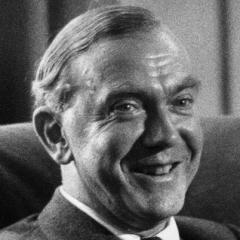
Author

Graham Greene
Graham Greene

Graham Greene was a renowned British writer born on October 2, 1904. His works are characterized by deep insight and unique narrative techniques, and he is hailed as one of the greatest novelists of the 20th century. Greene's writing spans a variety of themes, including spy novels, religious novels, and noir novels. more

You May Also Like

“Colored people don’t like Little Black Sambo. Burn it. White people don’t feel good about Uncle Tom’s Cabin. Burn it. Someone’s written a book on tobacco and cancer of the lungs? The cigarette people are weeping? Burn the book. Serenity, Montag. Peace, Montag. Take your fight outside. Better yet, into the incinerator.”

“Schopenhauer remarked that buying books would be better if you could also buy the time to read them. Books are different from natural objects in that they can overwhelm us in a way that nature’s abundance rarely does. There has always been too much to know; the universe is thoroughly baffling. When we walk into a bookstore, it is easy to feel oppressed by the amount of knowledge on tap. Why don’t we have the same feeling in a forest, at the beach, in a big city, or simply in breathing? There is more going on in our body every second than we will ever understand, and yet we rarely feel bothered by our inability to know it all. Books, however, are designed to make demands on our attention and time: they hail us in ways that nature rarely does. A thing is what Heidegger calls zunichtsgedrängt, relaxed and bothered about nothing. A plant or stone is as self-sufficient as the Aristotelian god or Heidegger’s slacker things, but books are needy. They cry out for readers as devils hunger for souls.”

“Yet few people ask from books what books can give us. Most commonly we come to books with blurred and divided minds, asking of fiction that it shall be true, of poetry that it shall be false, of biography that it shall be flattering, of history that it shall enforce our own prejudices. If we could banish all such preconceptions when we read, that would be an admirable beginning.”