Quotessence
Home / Quotes / Quote by Ferdinand Foch

Quote by Ferdinand Foch

Author

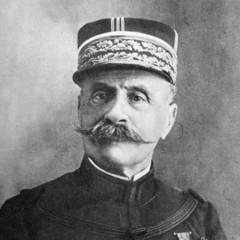
Ferdinand Foch
Ferdinand Foch

Ferdinand Foch, born on October 2, 1851, and died on March 20, 1929, was a renowned French military figure, often referred to as the 'Father of the French Army'. He served in key positions within the French military and participated in several wars, known for his exceptional military skills and strategic vision. more

You May Also Like

“Our enemies are Medes and Persians, men who for centuries have lived soft and luxurious lives; we of Macedon for generations past have been trained in the hard school of danger and war. Above all, we are free men, and they are slaves. There are Greek troops, to be sure, in Persian service — but how different is their cause from ours! They will be fighting for pay — and not much of at that; we, on the contrary, shall fight for Greece, and our hearts will be in it. As for our foreign troops — Thracians, Paeonians, Illyrians, Agrianes — they are the best and stoutest soldiers in Europe, and they will find as their opponents the slackest and softest of the tribes of Asia. And what, finally, of the two men in supreme command? You have Alexander, they — Darius!”

“Now we would wander around like strangers in those landscapes of our youth. We have been consumed in the fires of reality, we perceive differences only in the way tradesmen do, and we see necessities like butchers. We are free of care no longer – we are terrifying indifferent. We might be present in that world, but would we be alive in it? We are like children who have been abandoned and we are as experienced as old men, we are coarse, unhappy and superficial – I think that we are lost”

“Suppose two men at cards with nothing to wager save their lives. Who has not heard such a tale? A turn of the card. The whole universe for such a player has labored clanking to his moment which will tell if he is to die at that man’s hand or that man at his. What more certain validation of a man’s worth could there be? This enhancement of the game to its ultimate state admits no argument concerning the notion of fate. The selection of one man over another is a preference absolute and irrevocable and it is a dull man indeed who could reckon so profound a decision without agency or significance either one. In such games as have for their stake the annihilation of the defeated the decisions are quite clear. This man holding this particular arrangement of cards in his hand is thereby removed from existence. This is the nature of war, whose stake is at once the game and the authority and the justification. Seen so, war is the truest form of divination. It is the testing of one’s will and the will of another within that larger will which because it binds them is therefore forced to select. War is the ultimate game because war is at last a forcing of the unity of existence. War is god.”

“You said that you thought Queen Orlagh was waiting for an advantage to declare war. Instead, I think she is trying a new ruler—one she hopes she can trick or replace with another indebted to her. She thinks me young and feckless and means to take my measure.” “So what?” I ask. “Our choice is to endure her games, no matter how deadly, or engage in a war we cannot win?” Cardan shakes his head and drinks another cup of tea. “We show her that I am no feckless High King.” “And how do we do that?” I ask. “With great difficulty,” he says. “Since I fear she is right.”