Quotessence
Home / Quotes / Quote by Lillian Smith

Quote by Lillian Smith

“Those faces on Main Street shaded by wide straw hats are surrounded in my child-memory by hardware and ploughs, seed bags and bales of cotton, the smell of guano and mule lots, hot sun on sidewalks and lovely white ladies with sweet childlike voices and smooth childlike faces, and Old gardens of boxwood and camellias, and fields endlessly curving around my small world. I know now that the bitterness, the cruel sensual lips, the quick fears in hard eyes, the sashshaying buttocks of brown girls, the thin childish voices of white women, had a great deal to do with high interest at the bank and low wages in the mills and gullied fields and lynchings and Ku Klux Klan and segregation and sacred womanhood and revivals, and Prohibition. And that no part of this memory can be understood without recalling it all of it.”

Quote by Lillian Smith

Author
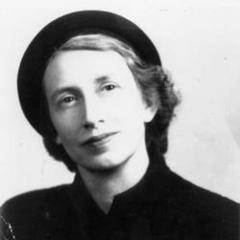
Lillian Smith
Lillian Smith

Lillian Smith was an American writer known for her novels and essays that often addressed racial issues in the American South. Born on December 12, 1897, she spent much of her life in the rural town of Decatur, Georgia. Smith's work, marked by its emotional depth and social commentary, includes the novel 'Strange Fruit' and the essay collection 'On the Road to Jim Crow'. She passed away on September 28, 1966. more

You May Also Like

“As I took my children sledding this morning, I watched them fly down the hill - aiming for the jump and flying in the air. Getting the wind knocked out of them as they landed hard then climbing up to do it again - relentless and brave. I took a moment to be happy they are young and innocent and appreciate the simple thrill of going fast down a hill. I pushed my own nervous inclination aside and instead of saying "Be careful!" I said "Aim Straight!" Then I let them go down the jump again and again because in this world, we need to be relentless and brave and I need to be sure they don't unlearn it.”

“To fail is nothing, unless you continue to ignore Cosmic Ordering.”

“Dodo Conway was a Catholic who had gone to Barnard and then married an architect who had gone to Columbia and was also a Catholic. They had a big, rambling house up the street from us, set behind a morbid façade of pine trees, and surrounded by scooters, tricycles, doll carriages, toy fire trucks, baseball bat, badminton nets, croquet wickets, hamster cages and cocker spaniel puppies--the whole sprawling paraphernalia of suburban childhood.”

“It would be inaccurate, however, to say that my childhood was untroubled. The normal fears and worries of every child were in me developed to a high degree; every day was an awesome prospect. I was uneasy about practically everything: the uncertainty of the future, the dark of the attic, the panoply and discipline of school, the transitoriness of life, the mystery of the church and of God, the frailty of the body, the sadness of afternoon, the shadow of sex, the distant challenge of love and marriage, the far-off problem of a livelihood.”

“What I came to dislike about Little League that spring was not the regulation per se, or the fathers--whose consciousness had generally been raised at least a little bit--or the tedium, or the low quality of play, or the pain of watching my son strike out a lot. It was the way I got reminded, every game, that this was the world my children lived in: the world in which the wild watershed of childhood had been brought fully under control of the adult Corps of Engineers.”