Quotessence
Home / Quotes / Quote by Charles le Gai Eaton

Quote by Charles le Gai Eaton

“So many ruins bear witness to good intentions which went astray, good intentions unenlightened by any glimmer of wisdom. To bring religion to the people is a fine and necessary undertaking, but this is not a situation in which the proposed end can be said to justify the means. The further people have drifted from the truth, the greater is the temptation to water down the truth, glossing over its less palatable aspects and, in short, allowing a policy of compromise to become one of adulteration. In this way it is hoped that the common man – if he can be found – will be encouraged to find a small corner in his busy life for religion without having to change his ways or to grapple with disturbing thoughts. It is a forlorn hope. Standing, as it were, at the pavement’s edge with his tray of goods, the priest reduces the price until he is offering his wares for nothing: divine judgement is a myth, hell a wicked superstition, prayer less important than decent behaviour, and God himself dispensable in the last resort; and still the passers-by go their way, sorry over having to ignore such a nice man but with more important matters demanding their attention. And yet these matters with which they are most urgently concerned are, for so many of them, quicksands in which they feel themselves trapped. Had they been offered a real alternative, a rock firm-planted from the beginning of time, they might have been prepared to pay a high price.”

Quote by Charles le Gai Eaton

Work

King of the Castle: Choice and Responsibility in the Modern World

Browse quotes and source details for this work. more

Author
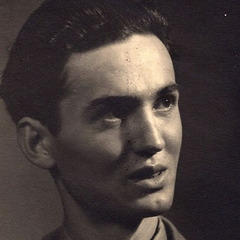
Charles le Gai Eaton

Charles le Gai Eaton, born on January 1, 1921, and died on February 26, 2010, was a renowned British writer known for his profound understanding of Eastern philosophy and culture. His works covered a wide range of topics, including philosophy, history, and literary criticism. more

You May Also Like

“The Church wishes, for example, to apply Rosmini's invitation to 'hear loftily of God' with worthy liturgical celebrations, stripping the concept of God from the guises, at times ingenuous and caricatural, in which an agrarian and prescientific civilization had dressed it. But it is a hard job. On the right, they shout impiety and sacrilege every time an old ritual is abandoned for a new one. On the left, vice versa, novelty is indiscriminately hailed for the sake of novelty, the whole edifice of the past is merrily dismantled, paintings and statues are sent up to the attic; idolatry and superstition are found everywhere, and it is even said that, to safeguard God's dignity, God must be spoken of in only the most select terms, or there must actually be silence.”

“To reform a religion, one must at first be able to recognize the follies of that religion, then only one can take necessary steps to discard those flaws. If your son has a drug addiction, you need to first recognize the fact that he is addicted to drugs, then you can take action to send him for rehab. Likewise, in order reform a religion’s historical habit of beating wives and using violence on people from other religions, you must first be conscientious enough to accept the fact, that, that specific religion has a history replete with violence, then you can take measures to mend the cultural mindset of that religion.”

“I pass to the Stationery Department. I buy several fountain and stylographic pens - it being my experience that, though a fountain pen in England behaves in an exemplary manner, the moment it is let loose in desert surroundings, it perceives that it is at liberty to go on strike and behaves accordingly, either spouting ink indiscriminately over me, my clothes, my notebook and anything else handy, or else coyly refusing to do anything but scratch invisibly across the surface of the paper. I also buy a modest two pencils. Pencils are, fortunately, not temperamental, and though given to a knack of quiet disappearance, I have always a resource at hand. After all, what is the use of an architect if not to borrow pencils from.”

“Once, when Geronda Joseph underwent a great temptation, he went into the desert to pray, and as he was crying out to God, he saw a vision of a large, beautiful bird singing. In a moment, he found himself in Paradise where there were many birds. The birds were angels, and among them was the large bird, singing and keeping the bass note. Imagine that! He saw it with his own eyes!”