Quotessence
Home / Quotes / Quote by Sebastian Barry

Quote by Sebastian Barry

Work

The Secret Scripture

In this novel, an elderly woman reflects on her life, sharing her personal history and the secrets she has kept. The narrative intertwines her past with her present, offering a poignant exploration of identity, mental health, and the complexities of human experience. more
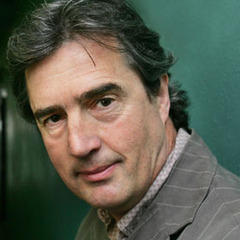
Author

Sebastian Barry
Sebastian Barry

Sebastian Barry is an Irish playwright known for his profound literary style and unique perspective on history. His works have won numerous literary awards, including the Nobel Prize in Literature. more

You May Also Like

“Towards the end of the Second World War, when I was sixteen years old, I was taken out of school and forced into the army. After a brief period of training at a base in Wüzburg, I arrived at the front, which by that time had already crossed the Rhine into Germany. There were well over a hundred in my company, all of whom were very young. One evening the company commander sent me with a message to battalion headquarters. I wandered all night long through destroyed, burning villages and farms, and when in the morning I returned to my company I found only the dead, nothing but dead, overrun by a combined bomber and tank assault. I could see only dead and empty faces, where the day before I had shared childhood fears and youthful laughter. I remember nothing but a wordless cry. Thus I see myself to this very day, and behind this memory all my childhood dreams crumble away.”

“All believers in Christ, the Scripture teaches, will suffer-all of us. You will be glorified, Paul says, if you suffer with him. The problem with too many of us is not that we don't suffer, but that we assume that only Third World Christians or heroic missionaries are suffering. My boys didn't know that they were suffering in Russia; they would feel it as suffering now.”

“Pod kvazi-mitskim totalitetom tehničke racionalnosti prijeti nam inteligencija bez patosa, inteligencija kojoj nije potreban nikakav jezik koji ima svoj vlastiti smisao jer ionako sve funkcionira bez bilo kakvog proturječja; ta inteligencija ne zna za spomen jer nije ugrožena nikakvim zaboravom: čovjek kao kompjuterizirana inteligencija bez osjetljivosti na patnju i bez morala, ukratko: čovjek kao rapsodija nedužnosti jednoga glatko funkcionirajućeg stroja. Treba li doista to biti čovjek nakon smrti čovjeka?”