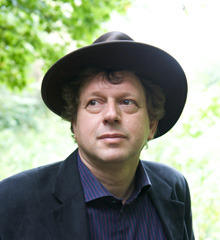
“Kelly was starting to have serious second thoughts about the whole assignment. Like all war correspondents, she supposed. Being on the ground was very different to sitting in the office anticipating being on the ground. Especially with the appearance of that red cloud.”
Quote by Peter F. Hamilton
“Another thing I had learned in Vietnam was that there are worse things than death, such as not being able to look anyone straight in the eye, especially the man in the mirror.”
Source: Means Of Escape: A War Correspondent's Memoir of Life and Death in Afghanistan, the Middle East, and Vietnam
“From seven hundred journalists at the beginning of March, the number had dwindled to about one hundred and fifty—print reporters, TV correspondents, photographers, cameramen, and support personnel. At the press center I encountered Kazem, who only a week before I had asked for help with my visa. “Why are you staying when everyone else is leaving?” he asked. I took a chance and replied in Arabic. Some journalists, I said, are as samid as the Iraqi people. Samid means “steadfast” and “brave” and is the adjective most often used by Iraqis to describe themselves. Kazem laughed and threw his arm around my shoulder.”
Source: And Then All Hell Broke Loose: Two Decades in the Middle East
“The bombing started up again, with explosions all around us, in broad daylight, but no one in the restaurant even flinched. Iraqis seemed numb after a quarter century under Saddam’s whip-hand rule. It was heartbreaking to see what a harsh dictatorship can do to the human soul. In less than a week, I had grown almost inured to explosions and fires.”
Source: And Then All Hell Broke Loose: Two Decades in the Middle East
“Each day had the same bloody rhythm: mortars at dawn, car bombs by 11: 00 a.m., drive-by shootings before tea, and mortars again at dusk. At night the death squads went to work.”
Source: And Then All Hell Broke Loose: Two Decades in the Middle East
“Then someone cried out, “Suicide bomber!” The crowd panicked. In the ensuing stampede, terrified pilgrims ran in both directions, many colliding in the middle of the bridge. A side railing collapsed under their weight, and scores leaped into the water whether they could swim or not. Hundreds were trampled to death. More than a thousand died. Hundreds of pairs of sandals were scattered around the bridge, left behind when pilgrims made their desperate dives into the river. I was given all of seventy-five seconds to tell the story on the Nightly News.”
Source: And Then All Hell Broke Loose: Two Decades in the Middle East
“I may have been in stage four, but I wasn’t completely crazy. At least eighty-six journalists had been killed in Iraq, more than in any other conflict since World War II, and another thirty-eight had been taken hostage. More would die in the years to come. I knew I had to limit my movements and take special care when I did go out.”
Source: And Then All Hell Broke Loose: Two Decades in the Middle East
“A good approach is to allow one dream per novel. Then, in the final revision, go back and get rid of that, too.”
Source: How Not to Write a Novel: 200 Classic Mistakes and How to Avoid Them—A Misstep-by-Misstep Guide
“I could scarcely believe that my new home was engulfed by war before I even had time to find an apartment. It seemed that war followed me everywhere I went.”
Source: And Then All Hell Broke Loose: Two Decades in the Middle East
“He asked us what we were doing, and our smuggler said, “Oh, nothing. We’re just hanging out”—as if lots of Americans in ninja suits loitered around Syria in the middle of the afternoon. We asked him if he had a cell phone. He didn’t, which meant we had twenty or thirty minutes to get back across the Turkish border.”
Source: And Then All Hell Broke Loose: Two Decades in the Middle East
“We were meat to be bought and sold. Speaking Arabic made me a curious and unusual product. I didn’t want to be special. I didn’t want them to be curious about me.”
Source: And Then All Hell Broke Loose: Two Decades in the Middle East