Quotessence
Home / Quotes / Quote by Patrick Cockburn

Quote by Patrick Cockburn

“I don't think the whole of Iraq would be under al-Sadr, but I think he would be the predominant force on the Shia side. Quite contrary to his sort of maverick, firebrand image, he's shown a propensity to deal with the other side, to look for compromises, to negotiate. You might have a loose federation [in Iraq].”

Quote by Patrick Cockburn

Author
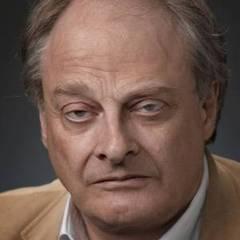
Patrick Cockburn
Patrick Cockburn

Patrick Cockburn is a renowned British journalist known for his in-depth reporting on the conflicts in the Middle East. His career began in the 1970s when he started working for The Scotsman. Cockburn is praised for his profound insights into war and conflict, and his work often reveals the complexities of politics and society. more

You May Also Like

“One of the problems with the media covering this place is that there are stereotypes of news, one of which is "war rages" and the other is "peace dawns." And there isn't much in between. When I talk to foreign journalists, often they are gritting their teeth because they've been asked for a piece about how shops are reopening and restaurants are reopening and so forth - happy pieces. And it just ain't so.”

“The poet's role has changed over the centuries, the ages. The poets, the griots, used to be the keepers of the facts; they were the story tellers, and the stories were allegorically written truths: where we came from, how we migrated over this river, got with this tribe, became this nation, and tamed the mountains. It changed from that to being purely entertainment. And once it became purely entertainment, it lost something.”

“Being a father is the hardest job on the planet, because we don't have parental instincts like women have. You have to learn how to be a father before you even become a father, from a very young age. It's necessary to override what we're told in society a father should be, like if your son falls and scrapes his knee, you got to be tough. Baseball and all that are cool, but it's the tenderness and interactions that are really important. Boys are different; we have to impart that sensibility and that tenderness to them.”