Quotessence
Home / Quotes / Quote by Lemn Sissay

Quote by Lemn Sissay

“Some people on bus seats shake at the shoulders, Stoned Elvises trying to dance after the gig. Some walk into the rain and look like they’re smiling, Running mascara writes sad bitter letters on their faces. Some drive their cars into lay-bys or park edges And cradle the steering-wheel looking like headless drivers. Some sink their open mouths into feather pillows And tremble on the bed like beached dolphins. Some people are bent as question marks when they weep And some are straight as exclamation marks. Some are soaking in emotional dew when they wake, Salt street maps etched into their faces. Some find rooms and fall to the floor as if praying to Allah. Noiseless Faces contorted in that silent scream that seems like laughter. Why is there not a tissue-giver? A man who looks for tears, Who makes the finest silk tissues and offers them for free? It seems to me that around each corner, beneath each stone, Are humans quietly looking for a place to cry on their own.”

Quote by Lemn Sissay

Work

Gold from the Stone: New and Selected Poems

This volume showcases a selection of poems that span the author's career, offering readers a glimpse into their evolving poetic style and thematic concerns. more

Author
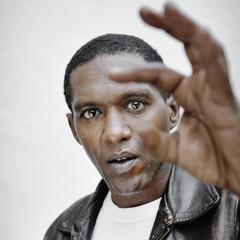
Lemn Sissay
Lemn Sissay

Lemn Sissay is a British author born in 1967. His works cover a variety of themes, including race, identity, and memory. Sissay is known for his unique narrative style and profound insights into cultural diversity. more

You May Also Like

“...disconnection is the ability to unplug your mind from the constant bombardment of all the distractions that come your way in order to connect to your inner mind and inner focus. It is the ability to find solitude in yourself. The more we can develop our ability to focus, the more we will be in control of how we respond to (or ignore) the distractions that come our way.”

“إنه دائم الغياب منذ ما قبل رحيله فقد اعتاد القريبون منه على تقبل عزلته و اختفاءه عنهم منذ وقت بعيد وعلى اعتبار ذاك الغياب خصيصة جوهرية لوجوده ، لهذا وقد رحل الآن لن يكون صعبا على العالم استيعاب حقيقة غيابه الأبدي. لقد قامت طبيعة حياته بتهيئة العالم لموته فقد كانت نوعا من الموت الاستباقي ، و إذا ما جاء أحد على ذكره فسيتم ذلك بصورة باهتة وبصوت خافت لا أكثر”

“But taking my meal outside by the burning juniper in the fireplace with more desert and mountain than I could explore in a lifetime open to view, I was invited to contemplate a far larger world, one which extends into a past and into a future without any limits known to human kind. By taking off my shoes and digging my toes into the sand I made contact with that larger world - an exhilarating feeling which leads to equanimity. Certainly I was still by myself, so to speak - there were no other people around and there still are none - but in the midst of such a grand tableau it was impossible to give full and serious consideration to Albuquerque. All that is human melted with the sky and faded out beyond the mountains and I felt, as I feel - is it a paradox? - that a man can never find or need better companionship than that of himself.”

“And to think that I might have become a poet like that if I had been allowed to settle somewhere, anywhere in the world, in one of the many shuttered-up houses in the country that no one looks after anymore. I would only have needed one room (the light room in the gable). I would have lived inside it with my old things, my family portraits, my books. And I would have had an armchair, and flowers and dogs, and a stout stick for rocky paths. And nothing else. Only a book bound in yellowing ivory-coloured leather with a flowery pattern for its endpapers: I would have written in it. I would have written a great deal, because I would have had many thoughts and memories of many things.”

“If a person wishes to engender self-improvement, they must eschew conventional norms and seek an authentic conversation with the self. I need to acknowledge all my ugly warts and attempt to use the conscious mind to trace my lowly state of existence devoted to pleasure seeking and self-glorification. I can give into the dismal implications of all the years I labored in foolish vocational and recreational pursuits or labor to transform former suffering into a creative force. I seek to convert the toxic tears of bitterness into a healing serum by cultivating an artistic approach to life. Cheerfully living in exile and embracing solitude creates personal space needed to flourish.”