Quotessence
Home / Quotes / Quote by Edward Abbey

Quote by Edward Abbey

“But taking my meal outside by the burning juniper in the fireplace with more desert and mountain than I could explore in a lifetime open to view, I was invited to contemplate a far larger world, one which extends into a past and into a future without any limits known to human kind. By taking off my shoes and digging my toes into the sand I made contact with that larger world - an exhilarating feeling which leads to equanimity. Certainly I was still by myself, so to speak - there were no other people around and there still are none - but in the midst of such a grand tableau it was impossible to give full and serious consideration to Albuquerque. All that is human melted with the sky and faded out beyond the mountains and I felt, as I feel - is it a paradox? - that a man can never find or need better companionship than that of himself.”

Quote by Edward Abbey

Work

Desert Solitaire

This book offers a profound exploration of the natural world and the human spirit through the author's personal observations and musings while living in the desolate landscapes of the American West. more

Author
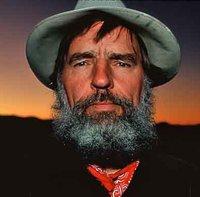
Edward Abbey
Edward Abbey

Edward Abbey was an American author known for his naturalist works and advocacy for environmental protection. His writings often take the desolate wilderness of the American Southwest as a backdrop, profoundly revealing the relationship between humans and nature. Abbey's writing style is unique, filled with humor and satire, and has had a profound impact on later generations. more

You May Also Like

“And to think that I might have become a poet like that if I had been allowed to settle somewhere, anywhere in the world, in one of the many shuttered-up houses in the country that no one looks after anymore. I would only have needed one room (the light room in the gable). I would have lived inside it with my old things, my family portraits, my books. And I would have had an armchair, and flowers and dogs, and a stout stick for rocky paths. And nothing else. Only a book bound in yellowing ivory-coloured leather with a flowery pattern for its endpapers: I would have written in it. I would have written a great deal, because I would have had many thoughts and memories of many things.”

“If a person wishes to engender self-improvement, they must eschew conventional norms and seek an authentic conversation with the self. I need to acknowledge all my ugly warts and attempt to use the conscious mind to trace my lowly state of existence devoted to pleasure seeking and self-glorification. I can give into the dismal implications of all the years I labored in foolish vocational and recreational pursuits or labor to transform former suffering into a creative force. I seek to convert the toxic tears of bitterness into a healing serum by cultivating an artistic approach to life. Cheerfully living in exile and embracing solitude creates personal space needed to flourish.”

“We are responsible for our own moral being. Shame and guilt spring from discontent with our morality and leading a wasteful life. A person whom rejects societal notions of success, does not believe in a merciful god, and is shunned by the same people whom he studiously avoids, is left with very little to steady their life except for moments of solitude to contemplate the aesthetic purpose of their being. We reaffirm the value of personal existence by working on self-improvement and dedicating our life to achieving purposeful goals.”