“The idea of governing at all times by the simple force of law (which we have been told is the only admissible principle of republican government) has no place but in the reveries of those political doctors whose sagacity disdains the admonitions of experimental instruction.”
Quote by Alexander Hamilton
Work
The Federalist Papers: A Collection of Essays Written in Favour of the New Constitution
This book is a collection of essays that were originally published in newspapers to promote the ratification of the U.S. Constitution. The authors, Alexander Hamilton, James Madison, and John Jay, discuss the principles and structure of the new government. The essays are considered foundational texts in American political thought and legal history. more
Author
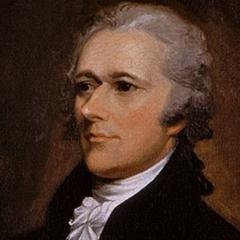
Alexander Hamilton
Alexander Hamilton was a Founding Father of the United States, born on January 11, 1757, and died on July 12, 1804. He played a crucial role in the American Revolutionary War and was instrumental in the drafting of the U.S. Constitution. As the first Secretary of the Treasury, Hamilton promoted fiscal stability and economic growth, establishing the First Bank of the United States and proposing solutions for federal debt. His ideas and policies had a profound impact on the early political and economic development of the United States. more
You May Also Like
Source: The Writings of George Washington: Being His Correspondence, Addresses, Messages, and Other Papers, Official and Private, Selected and Published from the Original Manuscripts; with a Life of the Author, Notes and Illustrations
Source: The Last Best Hope: The Greatest Speeches of Ronald Reagan
Source: The Virginia Report of 1799-1800: Touching the Alien and Sedition Laws; Together with the Virginia Resolutions of December 21, 1798, Including the Debate and Proceedings Thereon in the House of Delegates of Virginia and Other Documents Illustrative of the Report and Resolutions
Source: The writings of Thomas Jefferson
Source: Letters to the Press, 1758-1775
Source: Memoirs of the life and writings of Benjamin Franklin ...
“Newspapers . . . serve as chimnies to carry off noxious vapors and smoke.”
Source: Memoir, correspondence, and miscellanies from the papers of T. Jefferson
Source: Democracy in America