Quotessence
Home / Quotes / Quote by Martin Gardner

Quote by Martin Gardner

“When reputable scientists correct flaws in an experiment that produced fantastic results, then fail to get those results when they repeat the test with flaws corrected, they withdraw their original claims. They do not defend them by arguing irrelevantly that the failed replication was successful in some other way, or by making intemperate attacks on whomever dares to criticize their competence.”

Quote by Martin Gardner

Author
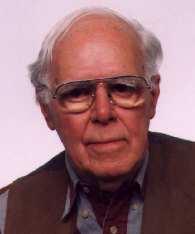
Martin Gardner
Martin Gardner

Martin Gardner was an accomplished science writer known for his popularization of mathematics, science, and pseudoscience. His work covered a wide range of scientific topics, including mathematics, logic, magic, and the history of science. Born on October 21, 1914, he passed away on May 22, 2010. more

You May Also Like

“Jefferson found in the religion phrases of the First Amendment no vague or fuzzy language to be bent or shaped or twisted as suited any Supreme Court Justice or White House incumbent. That amendment had built a wall, with the ecclesiastical estate on one side and the civil estate on the other.”

“Most of the founding fathers, sympathetic with and influenced by the European Enlightenment, saw religion - natural religion, that is - as a potential good, but with equal clarity they saw the religions of existing institutions and religions based on a fixed scriptural revelation as meddlesome, wrong-headed and hopelessly obsolete.”

“In America, religious dissent is as vital as it is elusive. Like the secretions of the pituitary, the juices of dissent are essential to ongoing life even if we do not always know precisely how, when or where they perform their tasks, and the not knowing - the flimsy, filmy elusiveness - is supremely characteristic of America's expressions of religious dissent. For in the United States no stalwart orthodoxy stands ever ready to parry the sharp thrust or clever feints of dissent.”

“A state of skepticism and suspense may amuse a few inquisitive minds. But the practice of superstition is so congenial to the multitude that, if they are forcibly awakened, they still regret the loss of their pleasing vision.”

“The stony-minded orthodox were right in fearing the first movement of new knowledge and free thought. It has gone on, and will go on, irresistibly, until some day we shall have no respect for an alleged "truth" which cannot stand the full blaze of knowledge, the full force of active thought.”

“The soaring, imaginative minds of men, constructing lofty, shimmering piles of abstract thought, and taking as their postulate a revelation from God, gaveus relgions which coule not possible maintained without belief and obedience: ... we find them most permanent and changeless among people who make the least effort to swquare their beliefs with the laws of life.”