“It is not your sin - it is your moderation that cries to heaven; your very sparingness in sin cries to heaven!”
Quote by Friedrich Nietzsche
Work
Thus spake Zarathustra
Thus Spoke Zarathustra is a philosophical novel by the German philosopher Friedrich Nietzsche, first published in 1883. The book is a collection of discourses attributed to Zarathustra, a fictional prophet-like figure who has returned to Earth after a long period of solitude in the mountains. The novel delves into themes such as the eternal recurrence of the same events, the creation of the overman, and the will to power. It is considered one of Nietzsche's most influential works and a cornerstone of modern Western philosophy. more
Author
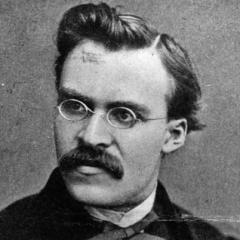
Friedrich Nietzsche
Friedrich Nietzsche was a German philosopher, cultural critic, poet, and writer whose works have had a profound impact on subsequent philosophy, literature, and thought. His ideas revolve around concepts such as the 'will to power', the 'Übermensch', and the 'eternal recurrence'. more
You May Also Like
“I have been casting shadows all my life without caring about how deeply they stain my soul.”
Source: Human, All Too Human: A Book for Free Spirits
Source: Basic Writings of Nietzsche
“One of my favorite horror films of the Nineties was 'Event Horizon.'”
Source: Basic Writings of Nietzsche
“The first principle of all action is leisure.”
Source: Complete Works of Aristotle, Volume 2: The Revised Oxford Translation
“Nothing is more common than unsuccessful people with talent.”