Quotessence
Home / Quotes / Quote by John Wayne

Quote by John Wayne

“There's a lot of things great about life. But I thin tomorrow is the most important thing. It comes to us at midnight very clean. It's perfect when it arrives and it puts itself in our hands. It hopes we've learned something from yesterday.”

Quote by John Wayne

Work

John Wayne's America, Why I Love Her

Browse quotes and source details for this work. more

Author
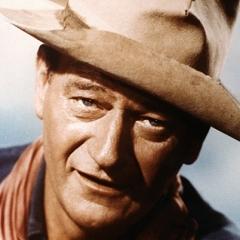
John Wayne
John Wayne

John Wayne, born on May 26, 1907 and died on June 11, 1979, was a renowned American film actor. Known for his rugged image and heroic roles in Western films, he starred in classics such as 'She Wore a Yellow Ribbon' and 'The Searchers'. Wayne's acting career spanned over half a century, and he won the hearts of audiences worldwide with his unique charm and acting skills. more

You May Also Like

“The fact is I am quite happy in a movie, even a bad movie. Other people, so I have read, treasure memorable moments in their lives: the time one climbed the Parthenon at sunrise, the summer night one met a lonely girl in Central Park and achieved with her a sweet and natural relationship, as they say in books. I too once met a girl in Central Park, but it was not much to remember. What I remember is the time John Wayne killed three men with a carbine as he was falling to the dusty street in Stagecoach, and the time the kitten found Orson Wells in the doorway in the Third Man.”

“The failure of Hellenism has been, largely, a matter of organization. Rome never tried to impose any sort of worship upon the countries it conquered and civilized; in fact, quite the contrary, Rome was eclectic. All religions were given an equal opportunity and even Isis—after some resistance—was worshipped at Rome. As a result we have a hundred important gods and a dozen mysteries. Certain rites are—or were—supported by the state because they involved the genius of Rome. But no attempt was ever made to coordinate the worship of Zeus on the Capitol with, let us say, the Vestals who kept the sacred fire in the old forum. As time passed our rites became, and one must admit it bluntly, merely form, a reassuring reminder of the great age of the city, a token gesture to the old gods who were thought to have founded and guided Rome from a village by the Tiber to world empire. Yet from the beginning, there were always those who mocked. A senator of the old Republic once asked an auger how he was able to get through a ceremony of divination without laughing. I am not so light-minded, though I concede that many of our rites have lost their meaning over the centuries; witness those temples at Rome where certain verses learned by rote are chanted year in and year out, yet no one, including the priests, knows what they mean, for they are in the early language of the Etruscans, long since forgotten. As the religious forms of the state became more and more rigid and perfunctory, the people were drawn to the mystery cults, many of them Asiatic in origin. At Eleusis or in the various caves of Mithras, they were able to get a vision of what this life can be, as well as a foretaste of the one that follows. There are, then, three sorts of religious experiences. The ancient rites, which are essentially propitiatory. The mysteries, which purge the soul and allow us to glimpse eternity. And philosophy, which attempts to define not only the material world but to suggest practical ways to the good life, as well as attempting to synthesize (as Iamblichos does so beautifully) all true religion in a single comprehensive system.”