Quotessence
Home / Quotes / Quote by Albert Einstein

Quote by Albert Einstein

“The religious geniuses of all ages have been distinguished by this kind of religious feeling, which knows no dogma and no God conceived in man's image; so that there can be no church whose central teachings are based on it. Hence it is precisely among the heretics of every age that we find men who were filled with this highest kind of religious feeling and were in many cases regarded by their contemporaries as atheists, sometimes also as saints. Looked at in this light, men like Democritus, Francis of Assisi, and Spinoza are closely akin to one another.”

Quote by Albert Einstein

Work

Ideas and Opinions

Ideas and Opinions is a compilation of essays and articles written by Albert Einstein, offering insights into his thoughts on science, philosophy, and various social issues. The book provides a glimpse into Einstein's intellectual journey and his reflections on the world around him. more

Author

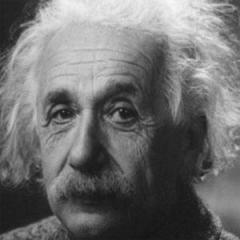
Albert Einstein
Albert Einstein

Albert Einstein, a German-born theoretical physicist, is renowned for his work on relativity and the photoelectric effect. His contributions revolutionized our understanding of the universe and had a profound impact on modern physics. more

You May Also Like

“How can cosmic religious feeling be communicated from one person to another, if it can give rise to no definite notion of a God and no theology? In my view, it is the most important function of art and science to awaken this feeling and keep it alive in those who are receptive to it.”

“Inner peace is impossible without patience. Wisdom requires patience. Spiritual growth implies the mastery of patience. Patience allows the unfolding of destiny to proceed at its won unhurried pace.”

“Poverty is not a certain small amount of goods, nor is it just a relation between means and ends; above all it is a relation between people. Poverty is a social status. As such it is the invention of civilization. Socrates made the same point 2,400 years ago: "He is richest who is content with least, for contentment is the wealth of nature.”