Quotessence
Home / Quotes / Quote by Irvine Welsh

Quote by Irvine Welsh

Work

T2 Trainspotting

In 'T2 Trainspotting', the author delves deeper into the lives of Mark Renton and his friends, revisiting the gritty streets of Edinburgh. The narrative is a blend of humor, tragedy, and reflection, as the characters confront the legacy of their drug-fueled youth and attempt to navigate the complexities of adult life. The novel is known for its raw portrayal of addiction and its impact on personal relationships. more
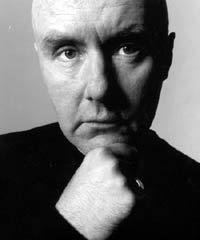
Author

Irvine Welsh
Irvine Welsh

Scottish novelist known for his novel 'Trainspotting', which depicted the drug culture in Edinburgh, Scotland. Welsh's works are characterized by a realistic style and delve into social issues. more

You May Also Like

“However contradictory the coroner's report — whether he pronounces Consumption or Loneliness or Suicide to be the cause of death — isn't it plain how the true artist-seer actually dies? I say that the true artist-seer, the heavenly fool who can and does produce beauty, is mainly dazzled to death by his own scruples, the blinding shapes and colors of his own sacred human conscience.”

“I remember, in hot floods, the way he slept, still as death, with his face washed flat, stony as a carved tomb and exquisite. His weakness and his ravening bitter needs were terrible, and beautiful, and irresistible as an earthquake. He scalded or smothered anyone he needed, but his needing and the hurt that it caused me were the most life I have ever had. Remember what a poor thing I have always been and forgive me.”

“I hate to hear you talk about all women as if they were fine ladies instead of rational creatures. None of us want to be in calm waters all our lives.”

“The thread has snapped. No sound even to mark the breaking let alone the fall. That long anticipated disintegration, when the darkest angel of all, the horror beyond all horrors, sits at last upon my chest, permanently enfolding me in its great covering wings, black as ink, veined in Bees' purple. A creature without a voice. A voice without a name. As immortal as my life. Come here at long last to summon the wind.”

“The reason why I do not know anything about myself, the reason why Siddhartha has remained alien and unknown to myself is due to one thing, to one single thing--I was afraid of myself, I was fleeing from myself. I was seeking Atman, I was seeking Brahman, I was determined to dismember myself and tear away its layers of husk in order to find in its unknown innermost recess the kernel at the heart of those layers, the Atman, life, the divine principle, the ultimate. But in so doing, I was losing myself.”