Quotessence
Home / Quotes / Quote by Joseph Campbell

Quote by Joseph Campbell

“The secret cause of all suffering, is mortality itself, which is the prime condition of life. It cannot be denied if life is to be affirmed.”

Quote by Joseph Campbell

Author
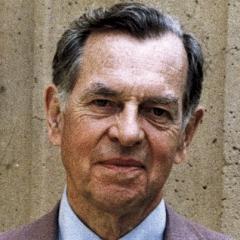
Joseph Campbell
Joseph Campbell

Joseph Campbell was an American writer, scholar, and mythologist, renowned for his studies of world mythology. His work, 'The Hero with a Thousand Faces', has had a profound impact on modern culture, widely used in literature, film, and psychology fields. more

You May Also Like

“So I was hard on the Beast, win or lose, When I got upstairs, those tragic girls in my head, Turfing him out of bed; standing alone On the balcony, the night so cold I could taste the stars On the tip of my tongue. And I made a prayer – Thumbing my pearls, the tears of Mary, one by one, Like a rosary – words for the lost, the captive beautiful, The wives, those less fortunate than we. The moon was a hand-mirror breathed on by a Queen. My breath was a chiffon scarf for an elegant ghost. I turned to go back inside. Bring me the Beast for the night. Bring me the wine-cellar key. Let the less-loving one be me. - an excerpt from Mrs. Beast -”

“She came anyway, but this time, she brought a wedding gift with her. A wedding gift that would kick off the Trojan War. Eris, the goddess of Discord, wasn't invited to the wedding of Peleus and Thetis. Not to be deterred, she came anyway, and she brought something with her. What she brought with her was a golden apple that had the words, "...to the fairest" engraved on it. And the three goddesses - Aphrodite, Athena and Hera - began fighting each other over it...and that's how the Trojan War started. It's also how Rome was founded, as the story goes.”

“Part certificate of birth, part medical records, part court-evaluated mental health status, and almost entirely badge of shame, other-born papers stated the nature of their powers and their known relatives. Other-born always came in a packageL in two or three or more siblings descended from sibling gods. Myths talked of the existence of other gods, too, but only twin, sister, or brother divinities bestowed their progenies with power. Some believed the power was too much for a single person to inherit, but Thais disagreed. Multitude is power, she used to say, We are stronger together.”

“The medieval and Renaissance Christians feared her because she was seen as a sexual being and therefore as a different kind of threat from other monsters. (...) The Romantics pitied her and feminists have celebrated her because she was a victim, even a once beautiful victim. (...) Medusa attracts our attention, in short, not only because of her hideous deformities, but also because as a mortal, as a sexual being and as a victim, she was human: one of us.”

“To his foreign guests, Vasiṣṭha said: “You have entered a place where amazement is vain. Everything is normal here. There are fathers who are sons of their sons or sons who are fathers of their fathers and their sisters, who are their lovers and wives too. Here the latter-day priest is also among the first of the gods. Here the monster is an ascetic and the ascetics fight the monsters.”

“Faith and mythology, in their profoundest sense, are the twin pillars that uphold the vast cathedral of human consciousness. They are the intertwined roots that nourish our understanding of existence, grounding us in the fertile soil of the unknown. Faith, is the audacious whisper in the heart of man, defying the chasm of uncertainty with its unwavering resonance. It is the audacity to trust in the unseen, to hear the unspoken, and to pursue the uncharted. It is the flame that illuminates the caverns of our deepest fears, casting shadows on our doubts, and lighting the path to our truest selves. Meanwhile, mythology is the grand tapestry we weave to contain the boundless cosmos within the finite landscapes of our minds. It is the narrative thread that stitches together the fabric of our collective consciousness, painting vibrant portraits of gods and monsters, of heroes and villains, of creation and destruction. Mythology gives form to faith, translating the abstract into the tangible, the divine into the comprehensible, the eternal into the temporal. It is the language of symbols, narrating the timeless tales of the human spirit dancing with the cosmos' infinite possibilities. Yet, both faith and mythology are but reflections in the mirror of existence, shimmering illusions that hint at a reality far beyond our comprehension. They are the echoes of the universe whispering its secrets to those daring enough to listen, the gentle lullabies that soothe our existential anxieties, the sweet honey that makes the bitter pill of the unknown more palatable. They are not the ultimate answers to life's mysteries, but the beautiful questions that keep us seeking, exploring, and wondering. They are the compass and the map, guiding us on our endless quest for truth, reminding us that the journey, not the destination, is the essence of existence.”