Quotessence
Home / Quotes / Quote by John Bunyan

Quote by John Bunyan

“Then said he, ’I am going to my Father’s; and though with great difficulty I am got hither, yet now I do not repent me of all the trouble I have been at to arrive where I am. My sword I give to him that shall succeed me in my pilgrimage, and my courage and skill to him that can get it. My marks and scars I carry with me, to be a witness for me that I have fought His battles who now will be my rewarder.’.... So he passed over, and all the trumpets sounded for him on the other side.”

Quote by John Bunyan

Author
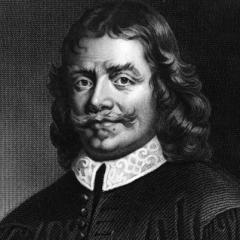
John Bunyan
John Bunyan

John Bunyan, born on November 28, 1628, and died on August 31, 1688, was a renowned English writer. He is best known for his religious works, especially his masterpiece 'Pilgrim's Progress'. Bunyan's life was filled with hardships, including multiple arrests for his preaching activities, but his works have had a profound impact on both Christian literature and English literature. more

You May Also Like

“You can be good for the mere sake of goodness; you cannot be bad for the mere sake of badness. You can do a kind action when you are not feeling kind and when it gives you no pleasure, simply because kindness is right; but no one ever did a cruel action simply because cruelty is wrong - only because cruelty is pleasant or useful to him, In other words, badness cannot succeed even in being bad in the same way in which goodness is good. Goodness is, so to speak, itself: badness is only spoiled goodness. And there must be something good first before it can be spoiled.”

“How will I ever get out of this labyrinth!" In reality, "How will I ever get out of this labyrinth!" were probably not Simon Bolivar's last words (although he did, historically, say them). His last words may have been "Jose! Bring the luggage. They do not want us here." The significant source for "How will I ever get out of this labyrinth!" is also Alaska's source, Gabriel Garcia Marquez's The General in his Labyrinth.”

“But deciding not to have children is a very, very hard decision for a woman to make: the atmosphere is worryingly inconducive to saying, "I choose not to," or "it all sounds a bit vile, tbh." We call these women "selfish" The inference of the word "childless" is negative: one of lack, and loss. We think of nonmothers as rangy lone wolves - rattling around, as dangerous as teenage boys or men. We make women feel that their narrative has ground to a halt in their thirities if they don't "finish things" properly and have children.”

“For most of the universe's life is not all gummy wads and tarty tarts; is a struggle against hardship, unfairness, corruption, abuse, and adversity in all its guises, where even to survive - let alone survive with dignity - is heroic. To soldier through the days in the wake of failure is the courageous act of many.”