Quotessence
Home / Quotes / Quote by Jonathan Zittrain

Quote by Jonathan Zittrain

“It's hard to try to be a canary in the coal mine in Internet because right now we're enjoying such innovation. But at the same time, we are truly in the midst of a sea change in how controllable the technology we use day by day is, and it is getting more and more controllable by a distinct group of entities, who may have our best interests in mind, at least at consumers right now, but they can change their minds or be regulated, forced to change their minds later.”

Quote by Jonathan Zittrain

Author
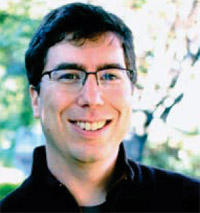
Jonathan Zittrain
Jonathan Zittrain

Jonathan Zittrain is a renowned law professor known for his research on internet law and policy. Born on December 24, 1969, he graduated from Harvard University and has been a professor at Harvard Law School. Zittrain's research focuses on issues such as network openness, copyright, privacy, and cybersecurity. more

You May Also Like

“When you have people who are embarrassing themselves for a living, who are making themselves look foolish and vulnerable and emotional for a living, your day-to-day reality is going to be a high-wire act. People are going to get in fights. People are going to get upset. People are going to walk off set. People are going to call each other names. It happens on every film that has any emotional people.”

“I love movies; I grew up loving movies. I've always loved movies. I never thought about making movies until I took art classes and then I started studying different artists. As you study paintings, you see light and shadow, of course - Rembrandt, Eugène Delacroix. You start to understand the relationship between people and art, and images. For me, between movies that I watched and art, it was like, I'd love to make moving art. Moving pictures.”

“How do you capture the drama of a Rembrandt painting in a movie? How do you feel that moment that they captured in two hours? I kind of fell into it and at one point, I decided I wanted to live an art life; I wanted to tell stories. I came to New York, and did what most people do - you become a PA and run and get coffee and pay your dues and learn until your opportunity comes.”

“I think people go to the movies to be entertained, to have an experience, to disappear from their own reality for a couple of hours. If the film truly succeeds in everything the filmmaker sets out for it to be, then it's elevated to art. It's elevated to something special, because it gives people a visceral feeling of something they're experiencing as a collective group. You feel something and that's what turns it into what you may call art.”

“There are many stories of people didn't set out to make a film that became a classic - the whole process was a disaster, everybody hated each other, the movie itself was a disaster, everybody thought the movie and the script was going to be a piece of crap. Look at Alfred Hitchcock and Psycho. Nobody wanted to make Psycho; it was crap to them. The only person that wanted to make Psycho was Hitchcock. Now, it's considered a classic and a work of art.”

“You want to take yourself seriously, and you want to make something that you hope will have resonance with the audience. You want to bring your perspective and what you consider your talent to that piece of work, and you move forward in that direction. Sometimes that's easy, and sometimes it's met with resistance because you're dealing with situations where, for everybody else, it's a piece of business.”

“Tupac Shakur is something that, of course I want to make the Tupac movie, I love Tupac, but when that movie was announced, we didn't even have a script yet. It was just being written. People announce things too soon. If you go to any filmmaker - Clint Eastwood, Oliver Stone, Martin Scorsese, Ben Affleck, Michael Mann - you go in their offices and there are scripts everywhere and there's about four or five of them you really want to make.”