Quotessence
Home / Quotes / Quote by George W Truett

Quote by George W Truett

“Our contention is not for mere toleration, but for absolute liberty. There is a wide difference between toleration and liberty. Toleration implies that somebody falsely claims the right to tolerate. Toleration is a concession, while liberty is a right. Toleration is a matter of expediency, while liberty is a matter of principle.”

Quote by George W Truett

Author
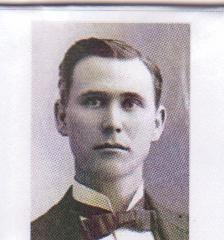
George W Truett
George W Truett

George W. Truett was an American writer born on May 6, 1867, and died on July 7, 1944. His works covered a range of fields including religion, history, and literature, and had a profound impact on posterity. more

You May Also Like

“That utterance of Jesus, "Render therefore unto Caesar the things which are Caesar's, and unto God the things that are God's," is one of the most revolutionary and history-making utterances that ever fell from those lips divine. That utterance, once and for all, marked the divorcement of church and state. It marked a new era for the creeds and deeds of men.”

“Constantine, the Emperor, saw something in the religion of Christ's people which awakened his interest, and now we see him uniting religion to the state and marching up the marble steps of the Emperor's palace, with the church robed in purple. Thus and there was begun the most baneful misalliance that ever fettered and cursed a suffering world... When ... Constantine crowned the union of church and state, the church was stamped with the spirit of the Caesars.”

“In the search for meaning we must not forget that the gods (or God, for that matter) are a concept of the human mind; they are the creatures of man, not vice versa. They are needed and invented to give meaning and purpose to the struggle that is life on Earth, to explain strange and irregular phenomena of nature, haphazard events and, above all, irrational human conduct. They exist to bear the burden of all things that cannot be comprehended except by supernatural intervention or design.”

“It is wiser, I believe, to arrive at theory by way of evidence rather than the other way around.... It is more rewarding, in any case, to assemble the facts first and, in the process of arranging them in narrative form, to discover a theory or a historical generalization emerging of its own accord.”

“Nevertheless we have this curious spectacle: daily the trained parrot in the pulpit gravely delivers himself of these ironies, which he has acquired at second-hand and adopted without examination, to a trained congregation which accepts them without examination, and neither the speaker nor the hearer laughs at himself. It does seem as if we ought to be humble when we are at a bench-show, and not put on airs of intellectual superiority there.”