Quotessence
Home / Quotes / Quote by Sri Aurobindo

Quote by Sri Aurobindo

Work

Bulletin Du Centre International D'éducation Sri Aurobindo

This book serves as a compendium of scholarly works and educational insights from the Centre International D'éducation Sri Aurobindo, exploring various educational philosophies and practices associated with the center's mission. more

Author
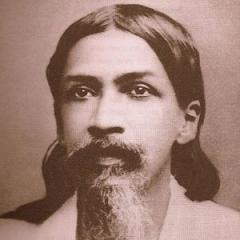
Sri Aurobindo
Sri Aurobindo

Sri Aurobindo, a philosopher, poet, and politician from India, was born on August 15, 1872, and passed away on December 5, 1950. He is renowned for his profound philosophical thoughts and his contributions to the spiritual revival of India. more

You May Also Like

“The Hindu religion appears ... as a cathedral temple, half in ruins, noble in the mass, often fantastic in detail but always fantastic with a significance crumbling or badly outworn in places, but a cathedral temple in which service is still done to the Unseen and its real presence can be felt by those who enter with the right spirit.”

“There are four great events in history, the siege of Troy, the life and crucifixion of Christ, the exile of Krishna in Brindaban and the colloquy on the field of Kurukshetra. The siege of Troy created Hellas, the exile in Brindaban created devotional religion, (for before there was only meditation and worship), Christ from his cross humanized Europe, the colloquy at Kurukshetra will yet liberate humanity.”

“The seers of ancient India had, in their experiments and efforts at spiritual training and the conquest of the body, perfected a discovery which in its importance to the future of human knowledge dwarfs the divinations of Newton and Galileo , even the discovery of the inductive and experimental method in Science was not more momentous.”

“I say, of the Congress, then, this - that its aims are mistaken, that the spirit in which it proceeds towards their accomplishment is not a spirit of sincerity and whole-heartedness, and that the methods it has chosen are not the right methods, and the leaders in whom it trusts, not the right sort of men to be leaders; - in brief, that we are at present the blind led, if not by the blind, at any rate by the one-eyed.”

“To play with baubles is our ambition, not to deal with grave questions in a spirit of serious energy. But while we are playing with baubles, with our Legislative Councils, our Simultaneous Examinations, our ingenious schemes for separating the judicial from the executive functions, - while we, I say, are finessing about trifles, the waters of the great deep are being stirred and that surging chaos of the primitive man over which our civilised societies are superimposed on a thin crust of convention, is being strangely and ominously agitated.”

“India of the ages is not dead nor has she spoken her last creative word; she lives and has still something to do for herself and the human peoples. And that which must seek now to awake is not an anglicised oriental people, docile pupil of the West and doomed to repeat the cycle of the occident's success and failure, but still the ancient immemorable Shakti recovering her deepest self, lifting her head higher towards the supreme source of light and strength and turning to discover the complete meaning and a vaster form of her Dharma.”

“The deeper we look, the more we shall be convinced that the one thing wanting, which we must strive to acquire before all others, is strength strength physical, strength mental, strength moral, but above all strength spiritual which is the one inexhaustible and imperishable source of all the others. If we have strength everything else will be added to us easily and naturally.”

“Many of us, utterly overcome by Tamas, the dark and heavy demon of inertia, are saying nowadays that it is impossible, that India is decayed, bloodless and lifeless, too weak ever to recover; that our race is doomed to extinction. It is a foolish and idle saying. No man or nation need be weak unless he chooses, no man or nation need perish unless he deliberately chooses extinction.”