“At the great iron gate of the churchyard he stopped and looked in. He looked up at the high tower spectrally resisting the wind, and he looked round at the white tombstones, like enough to the dead in their winding-sheets, and he counted the nine tolls of the clock-bell.”
Quote by Charles Dickens
Work
Charles Dickens's works. Charles Dickens ed. [18 vols. of a 21 vol. set. Wanting A child's history of England; Christmas stories; The mystery of Edwin Drood].
This extensive collection of Charles Dickens's literary works features 18 volumes from a larger 21-volume set. It is a curated selection that excludes certain notable titles such as 'A Child's History of England,' 'Christmas Stories,' and 'The Mystery of Edwin Drood.' The remaining volumes are a comprehensive representation of Dickens's writing, showcasing his renowned storytelling and social commentary. more
Author
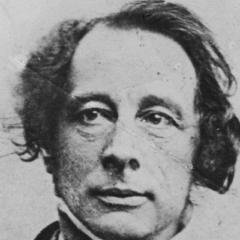
Charles Dickens
Charles Dickens, a British writer born on February 7, 1812, and died on June 9, 1870, is one of the greatest novelists of the 19th century. Known for his profound social criticism and vivid narrative style, Dickens' works extensively cover social reality, revealing various issues in the British society of the time. more
You May Also Like
Source: Charles Dickens's works. Charles Dickens ed. [18 vols. of a 21 vol. set. Wanting A child's history of England; Christmas stories; The mystery of Edwin Drood].
Source: The posthumous papers of the Pickwick Club
Source: Delphi Complete Works of Charles Dickens (Illustrated)
Source: Oliver Twist
Source: Oliver Twist
Source: LITTLE DORRIT
“Nobody near me here, but rats, and they are fine stealthy secret fellows.”
Source: The Old Curiosity Shop
Source: The Works of Charles Dickens
Source: a tale of two cities