Quotessence
Home / Quotes / Quote by Djuna Barnes

Quote by Djuna Barnes

Work

Nightwood: The Original Version and Related Drafts

Nightwood: The Original Version and Related Drafts is a scholarly compilation that presents the first edition of the novel alongside its various drafts. It provides readers with insights into the author's creative process, showcasing the changes and revisions made throughout the writing of the story. The collection is a valuable resource for literary scholars and enthusiasts interested in the development of the narrative and the author's writing style. more

Author
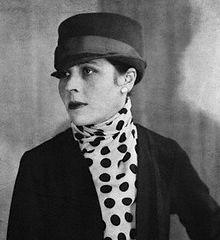
Djuna Barnes
Djuna Barnes

Djuna Barnes, an American writer, was born on June 12, 1892, and died on June 18, 1982. She is known for her unique literary style and profound modernist thoughts. more

You May Also Like

“Surely it should be a matter of moral responsibility that we humans, different from other animals mainly by virtue of our more highly developed intellect and, with it, our greater capacity for understanding and compassion, ensure that medical progress slowly detaches its roots from the manure of non-human animal suffering and despair.”

“Louis [Leakey] was anxious to initiate a scientific study of these chimpanzees. It would be difficult, he emphasized, for nothing was known; there were no guidelines for such a field study; and the habitat was remote and rugged. Dangerous wild animals would be living there, and chimpanzees themselves were considered at least four times stronger than humans. I remember wondering what kind of scientist he would find for such a herculean task.”

“So long as we continued to attach more importance to our own narrow group membership than to the 'global village' we would propagate prejudice and ignorance. There was absolutely no harm in being part of a small group - indeed, with our hunter-gatherer band mentality it gave comfort, provided us with an inner circle of friends who could be utterly trusted, who were absolutely reliable. It helped give us peace of mind. The danger came only from drawing that sharp line, digging that ditch, laying that minefield, between our own group and any other group that thought differently.”

“Words can enhance experience, but they can also take so much away. We see an insect and at once we abstract certain characteristics and classify it - a fly. And in that very cognitive exercise, part of the wonder is gone. Once we have labeled the things around us we do not bother to look at them so carefully. Words are part of our rational selves, and to abandon them for a while is to give freer reign to our intuitive selves.”