Quotessence
Home / Quotes / Quote by David Hume

Quote by David Hume

“Of all the animals with which this globe is peopled, there is none towards whom nature seems, at first sight, to have exercised more cruelty than towards man, in the numberless wants and necessities with which she has loaded him, and in the slender means which she affords to the relieving these necessities.”

Quote by David Hume

Author
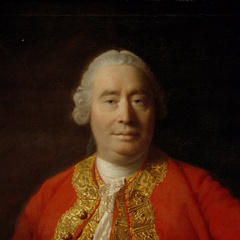
David Hume
David Hume

David Hume, born on May 7, 1711, in Edinburgh, Scotland, and died on August 25, 1776, was an outstanding philosopher, historian, and economist. Known for his contributions to empiricism and skepticism, his works have had a profound impact on subsequent philosophy, economics, and psychology. more

You May Also Like

“Upon the whole, necessity is something, that exists in the mind, not in objects; nor is it possible for us ever to form the most distant idea of it, consider'd as a quality in bodies. Either we have no idea of necessity, or necessity is nothing but that determination of thought to pass from cause to effects and effects to causes, according to their experienc'd union.”

“Reasoning from the common course of nature, and without supposing any new interposition of the Supreme Cause, which ought always to be excluded from philosophy; what is incorruptible must also be ingenerable. The soul, therefore, if immortal, existed before our birth: And if the former existence noways concerned us, neither will the latter.”

“When I think of God, when I think of him as existent, and when I believe him to be existent, my idea of him neither increases nordiminishes. But as it is certain there is a great difference betwixt the simple conception of the existence of an object, and the belief of it, and as this difference lies not in the parts or composition of the idea which we conceive; it follows, that it must lie in the manner in which we conceive it.”

“There surely is a being who presides over the universe; and who, with infinite wisdom and power, has reduced the jarring elementsinto just order and proportion. Let speculative reasoners dispute, how far this beneficent being extends his care, and whether he prolongs our existence beyond the grave, in order to bestow on virtue its just reward, and render it fully triumphant.”

“Learning has been as great a Loser by being shut up in Colleges and Cells, and secluded from the World and good Company. By that Means, every Thing of what we call Belles Lettres became totally barbarous, being cultivated by Men without any Taste of Life or Manners, and without that Liberty and Facility of Thought and Expression, which can only be acquir'd by Conversation.”