Quotessence
Home / Quotes / Quote by Renny Harlin

Quote by Renny Harlin

“In Hollywood, you tend to get pigeonholed to certain genres, and then when you try to do something different, it's not always so easy. Obviously, you don't want to keep repeating yourself, all the time. So, it's a constant struggle for every filmmaker and actor to find something that you can really feel passionate about. It's a profession like anything else.”

Quote by Renny Harlin

Author
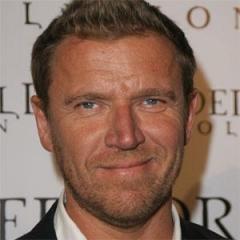
Renny Harlin
Renny Harlin

Renny Harlin is a renowned film director known for his work in action and thriller films. Born on March 15, 1959, he has directed several successful movies, including 'Die Hard' and 'Deep Blue Sea'. His films are known for their intense plots and exciting action sequences. more

You May Also Like

“I like filmmakers where, if their film comes on and you step in halfway through it, you can recognize that, hey, this is a Coen Brothers film. Or, hey, this is a Stanley Kubrick movie. You can recognize some filmmakers. Like, if you put on a Sam Raimi movie, you can tell that it's a Sam Raimi movie pretty quickly. I like a signature style that people can recognize and relate to, and connect with. I think that is part of why we seek out certain directors. We want to see how they view the world.”

“Sure we girls can wear pants now, and vote, and go to college, have a bank account, get a job that is not just stewardess or nurse. But we still have to deal with micro-aggressions and daily sexism. We are still fighting for word over our own bodies. We still get the short shrift on equal pay. We're still not represented in media or the arts with total parity. Not on screen or on the page or behind the scenes. It's still not easy. There is still this constant low-grade fight to be seen and taken seriously when you are a girl and when you become a woman. It totally sucks.”

“One of the reasons I love language is that concerning semiotics, language is an arbitrary sign system, which means the signs within it are free-floating, but we put them in a certain order to get them to have meaning for us. If we left them alone, they'd be like water, like the ocean. It would be just this vast field of free-floating matter or signs, so in this way, I think language and water have much in common. It's only us bringing grammar and syntax and diction and the human need for meaning that orders language, hierarchizes it.”

“I believe we all have lists of shame. Long lists. We live with our constellation of shames quite privately. But they weigh us down. I wish I could abracadabra away shame. This is such a waste of our small time on earth. Our bodies are often the focus of shame. The shame of the body changing. Of the sexual body. Of the aging body. Not being able to do what you once could do. Even just looking at your skin as you age, the texture, the wrinkle, the sag, and somehow feeling ashamed and responsible for its changes.”

“My mother had a life-altering stroke when I was nineteen and she died when I was twenty-three. I'm now older than my mother when she died and my relationship with her has really changed over these many years. I continue to stay interested in her and I know her differently now. Losing my mother, losing dear friends, is now part of the fabric of my being alive. And the fabric keeps changing, which is interesting.”

“Once a big loss has happened it is part of the picture forever. Not something you "get over." While each loss has felt specific, one thing I miss with each loss is entirely selfish, I miss the way a particular person saw me, understood me. But part of the challenge of being alive is to remain curious in any circumstance and this has helped me with grief. I want to feel all the contours and contradictions of living.”

“I love secrets. Here's a bunch of people who think they know each other over a long period of time. And they do. And they don't. Secrets aren't the same thing as shame, but they can fall in that category. I'm very interested in the ways that people are open and honest with one another and simultaneously in hiding. What we know about those we love is only part of the story. Who do we protect with our secrets? Others? Ourselves? These are questions that interest me in fiction. The public and the private self.”