Quotessence
Home / Quotes / Quote by Thomas Hardy

Quote by Thomas Hardy

“Yes; quaint and curious war is! You shoot a fellow down you'd treat if met where any bar is, or help to half-a-crown.”

Quote by Thomas Hardy

Author
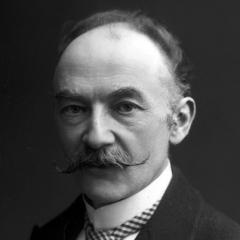
Thomas Hardy
Thomas Hardy

Thomas Hardy, a British novelist born on June 2, 1840, and died on January 11, 1928, is renowned for his novels that depict rural life, reflecting the social changes in 19th-century England. His works often carry a sense of pessimism, depicting the fates of characters with sympathy. more

You May Also Like

“What is the problem of women's freedom? It seems to me to be this: how to arrange the world so that women can be human beings, with a chance to exercise their infinitely varied gifts in infinitely varied ways, instead of being destined by the accident of their sex to one field of activity--housework and child-raising. And second, if and when they choose housework and child-raising to have that occupation recognized by the world as work, requiring a definite economic reward and not merely entitling the performer to be dependent on some man.”

“Billboards, billboards, drink this, eat that, use all manner of things, everyone, the best, the cheapest, the purest and most satisfying of all their available counterparts. Red lights flicker on every horizon, airplanes beware; cars flash by, more lights. Workers repair the gas main. Signs, signs, lights, lights, streets, streets.”

“Autonomy means women defining themselves and the values by which they will live, and beginning to think of institutional arrangements which will order their environment in line with their needs.... Autonomy means moving out from a world in which one is born to marginality, to a past without meaning, and a future determined by others--into a world in which one acts and chooses, aware of a meaningful past and free to shape one's future.”

“For boys, the family was the place from which one sprang and to which one returned for comfort and support, but the field of action was the larger world of wilderness, adventure, industry, labor, and politics. For girls, the family was to be the world, their field of action the domestic circle. He was to express himself in his work and, through it and social action, was to help transform his environment; her individual growth and choices were restricted to lead her to express herself through love, wifehood, and motherhood--through the support and nurture of others, who would act for her.”