“But the most common species of love is that which first arises from beauty, and afterwards diffuses itself into kindness and into the bodily appetite. Kindness or esteem, and the appetite to generation, are too remote to unite easily together. The one is, perhaps, the most refined passion of the soul; the other the most gross and vulgar. The love of beauty is placed in a just medium betwixt them, and partakes of both their natures: From whence it proceeds, that it is so singularly fitted to produce both.”
Quote by David Hume
Work
A Treatise of Human Nature: Top Philosophy Collections
This compilation includes foundational texts that have significantly influenced the study of human nature, psychology, and ethics, showcasing the depth and breadth of philosophical inquiry throughout history. more
Author
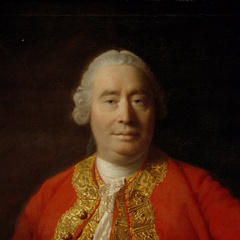
David Hume
David Hume, born on May 7, 1711, in Edinburgh, Scotland, and died on August 25, 1776, was an outstanding philosopher, historian, and economist. Known for his contributions to empiricism and skepticism, his works have had a profound impact on subsequent philosophy, economics, and psychology. more
You May Also Like
Source: ESSAYS ON SUICIDE AND THE IMMORTALITY OF THE SOUL
“The most pernicious of all taxes are the arbitrary.”
Source: The Philosophical Works: Including All the Essays, and Exhibiting the More Important Alterations and Corrections in the Successive Ed. Publ. by the Author
Source: The philosophical works of David Hume
Source: A Treatise of Human Nature: Top Philosophy Collections
Source: The Empiricists: Locke: Concerning Human Understanding; Berkeley: Principles of Human Knowledge & 3 Dialogues; Hume: Concerning Human Understanding & Concerning Natural Religio
Source: Delphi Complete Works of David Hume (Illustrated)
Source: A Treatise of Human Nature: Revision of Great Book
Source: A Treatise of Human Nature: Top Philosophy Collections
Source: A Treatise on Human Nature: Being an Attempt to Introduce the Experimental Method of Reasoning Into Moral Subjects; and Dialogues Concerning Natural Religion