Quotessence
Home / Quotes / Quote by Khalil Gibran

Quote by Khalil Gibran

Work

Kahlil Gibran: Masterpieces

This book compiles a selection of poems, essays, and philosophical writings by Kahlil Gibran, showcasing his profound insights on love, life, and spirituality. more

Author
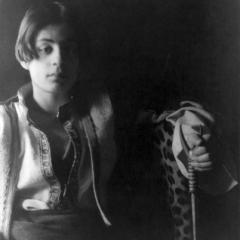
Khalil Gibran
Khalil Gibran

Khalil Gibran, born on January 6, 1883, and died on April 10, 1931, was a renowned Lebanese poet, painter, and philosopher. His works are known for their profound philosophy and unique artistic style, with notable titles including 'The Prophet'. more

You May Also Like

“Grover wore his fake feet and his pants to pass as human. He wore a green rasta-style cap, because when it rained his curly hair flattened and you could just see the tips of his horns. His bright orange backpack was full of scrap metal and apples to snack on. In his pocket was a set of reed pipes his daddy goat had carved for him, even though he only knew two songs: Mozart's Piano Concerto no. 12 and Hilary Duff's "So Yesterday," both of which sounded pretty bad on reed pipes.”

“In the same way a Christian is not a man who never goes wrong, but a man is enabled to repent and pick himself up and begin over again after each stumble--because the Christ-life is inside him, repairing him all the time, enabling him to repeat (in some degree) the kind of voluntary death which Christ Himself carried out." - Mere Christianity”

“This symmetrical composition--the same motif at the beginning and at the end--may seem quite "novelistic" to you, and I am willing to agree, but only on condition that you refrain from reading such notions as "fictive," "fabricated," and "untrue to life" into the word "novelistic." Because human lives are composed in precisely such a fashion.”

“Dreaming is not merely an act of communication (or coded communication, if you like); it is also an aesthetic activity, a game of the imagination, a game that is a value in itself. Our dreams prove that to imagine--to dream about things that have not happened--is among mankind's deepest needs. Herein lies the danger. If dreams were not beautiful, they would be quickly forgotten.”

“His overriding life necessity was not love, it was his profession…He had come to medicine not by coincidence or calculation but by a deep inner desire. Insofar as it is possible to divide people into categories, the surest criterion is the deep-seated desires that orient them to one or another lifelong activity. Every Frenchman is different. But all the actors the world over are similar.”