“The rules of scientific investigation always require us, when we enter the domains of conjecture, to adopt that hypothesis by which the greatest number of known facts and phenomena may be reconciled.”
Quote by Matthew Fontaine Maury
Work
The Physical Geography of the Sea
This comprehensive text delves into the physical aspects of the sea, examining the dynamics of ocean currents, the geological processes shaping coastlines, and the diverse ecosystems that thrive beneath the waves. The book provides a detailed look at the interplay between the physical and biological components of the marine environment, offering insights into the complex and dynamic nature of the world's oceans. more
Author
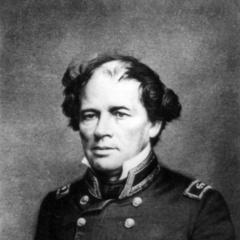
Matthew Fontaine Maury
Matthew Fontaine Maury, an American astronomer and oceanographer, is known as the 'Father of Oceanography'. Born on January 14, 1806, and died on February 1, 1873, Maury is renowned for his contributions to oceanography, particularly for compiling 'The Physical Geography of the Sea', which had a profound impact on navigation. more
You May Also Like
“The safest words are always those which bring us most directly to facts.”
Source: Knowledge and Error: Sketches on the Psychology of Enquiry
Source: Pioneer Work in Opening the Medical Profession to Women: Autobiographical Sketches
Source: Science in the Making
Source: Cosmos