Quotessence
Home / Quotes / Quote by Georg Brandes

Quote by Georg Brandes

“Forgetfulness, the unhistorical, is ... the atmosphere, in which alone life can come into being. In order to understand it, let us imagine a youth who is seized with a passion for a woman, or a man who is swayed by a passion for his work. In both cases what lies behind them has ceased to exist and yet this state (the most unhistorical that can be imagined) is that in which every action, every great deed is conceived and accomplished.”

Quote by Georg Brandes

Author
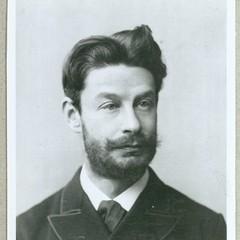
Georg Brandes
Georg Brandes

Georg Brandes was a Danish literary critic born on February 4, 1842, and died on February 19, 1927. His works had a profound impact on European literature at the end of the 19th and beginning of the 20th centuries. more

You May Also Like

“The historian is looked upon as objective when he measures the past by the popular opinions of his own time, as subjective when he does not take these opinions for models. That man is thought best fitted to depict a period of the past, who is not in the least affected by that period. But only he who has a share in building up the future can grasp what the past has been, and only when transformed into a work of art can history arouse or even sustain instincts.”

“Nietzsche inveighs against every sort of historical optimism; but he energetically repudiates the ordinary pessimism, which is the result of degenerate or enfeebled instincts of decadence. He preaches with youthful enthusiasm the triumph of a tragic culture, introduced by an intrepid rising generation, in which the spirit of ancient Greece might be born again. He rejects the pessimism of Schopenhauer, for he already abhors all renunciation; but he seeks a pessimism of healthiness, one derived from strength, from exuberant power, and he believes he has found it in the Greeks.”

“But what of the voice and judgment of conscience? The difficulty is that we have a conscience behind our conscience, an intellectual one behind the moral. ... We can see quite well that our opinions of what is noble and good, our moral valuations, are powerful levers where action is concerned; but we must begin by refining these opinions and independently creating for ourselves new tables of values.”

“Since fresh examples and proofs could always be found of the alleged relation between guilt and punishment: if you behave in such and such a way, it will go badly with you. Now, as it generally does go badly, the allegation was constantly confirmed; and thus popular morality, a pseudo- science on a level with popular medicine, continually gained ground.”

“What [Nietzsche] calls slave morality is to him purely spite-morality; and this spite-morality gave new names to all ideals. Thus impotence, which offers no reprisal, became goodness; craven baseness became humility; submission to him who was feared became obedience; inability to assert one's self became reluctance to assert one's self, became forgiveness, love of one's enemies. Misery became a distinction”