“Matthey, a Geneva physician very close to Rousseau's influence, formulates the prospect for all men of reason: 'Do not glory in your state, if you are wise and civilized men; an instant suffices to disturb and annihilate that supposed wisdom of which you are so proud; an unexpected event, a sharp and sudden emotion of the soul will abruptly change the most reasonable and intelligent man into a raving idiot.”
Quote by Michel Foucault
Work
Madness and Civilization: A History of Insanity in the Age of Reason
This book delves into the societal and medical perspectives on mental illness from the 17th to the 19th centuries, examining the evolution of attitudes towards the mentally ill and the development of psychiatric practices. more
Author
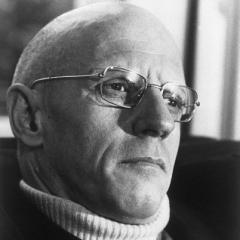
Michel Foucault
Michel Foucault was a French philosopher known for his critical analysis of knowledge, power, and discourse. His work covered a wide range of topics, including madness, prisons, sexuality, archaeology of knowledge, and biopolitics. Foucault's ideas have had a profound impact on postmodernism, critical theory, and cultural studies. more
You May Also Like
“This living stuff is a lot. Too much, and not enough. Half empty, and half full.”
Source: Then Again
Source: Coriolanus
Source: The Folklore of Discworld
Source: The Complete Works of F. Scott Fitzgerald: Novels, Short Stories, Poetry, Articles, Letters, Plays & Screenplays: From the author of The Great Gatsby, The Side of Paradise, Tender Is the Night, The Beautiful and Damned, The Love of the Last Tycoon, The Curious Case of Benjamin Button and many other notable works
“An expectation is a future object, recognised as belonging to me.”
Source: Indiana
Source: Phantastes: A Faerie Romance for Men and Women