Quotessence
Home / Quotes / Quote by Robert E. Lee

Quote by Robert E. Lee

Work

REBEL YELL: History of the Confederacy, Memoirs and Biographies of the Confederate Leaders & Official Documents: History of the Confederate States, The Rise and Fall of the Confederate Government, Jefferson Davis, Robert E. Lee, Heros von Borcke, Constitution of the Confederate States and More

This book is a compilation of historical texts and biographical accounts that delve into the history of the Confederate States of America. It includes the Constitution of the Confederate States, and offers insights into the lives and contributions of key figures like Jefferson Davis and Robert E. Lee. The collection also features official documents and memoirs that provide a detailed look at the rise and fall of the Confederate Government. more

Author
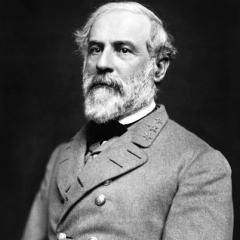
Robert E. Lee
Robert E. Lee

Robert E. Lee, a prominent military officer in American history, was born on January 19, 1807, and died on October 12, 1870. He served as the commanding general of the Confederate States Army during the American Civil War, known for his military skills and loyalty. more

You May Also Like

“The very same British and American families who had combined to wreck the Indian textile industry in the promotion of the opium trade [...] combined to make the trade, a valuable source of revenue. In 1864 they joined forces to create causes for war and to promote the terrible War Between the States, also known as the American Civil War.”

“The South was at the point where the scale was tipping against slavery. It was slowly dawning on the plantation owners that slave labor was not economic, besides being morally wrong. Slavery was destined to be abolished, whether for economic reasons or moral reasons matters not, but the international intriguers were not going to wait for voluntary abolition to rob them of their trump card.”

“In the North, neither greenbacks, taxes, nor war bonds were enough to finance the war. So a national banking system was created to convert government bonds into fiat money, and the people lost over half of their monetary assets to the hidden tax of inflation. In the South, printing presses accomplished the same effect, and the monetary loss was total.”

“In the North, the sale of government bonds was the one measure for raising funds that seemed to work. Even that, however, with the lure of compounded interest to be paid in gold at a future date, failed to raise more than about half the needed amount. So the Union faced a real dilemma. The only options remaining were (1) terminate the war or (2) print fiat money. For Lincoln and the Republicans who controlled Congress, the choice was never seriously in doubt.”

“American banks may have been unable to supply adequate loans, but the Rothschild consortium in Britain was both able and willing. It was during this time that the Rothschilds were consolidating their new industrial holdings in the United States through their agent, August Belmont. Derek Wilson tells us: "They owned or had major shareholdings in Central American ironworks, North American canal construction companies, and a multiplicity of other concerns. They became the major importers of bullion from the newly discovered goldfields".”

“During the fiscal year ending in 1861, expenses of the federal government had been $67 million. After the first year of armed conflict they were $475 million and, by 1865, had risen to one billion, three-hundred million dollars. On the income side of the ledger, taxes covered only about eleven per cent of that figure. By the end of the war, the deficit had risen to $2.61 billion. That money had to come from somewhere.”