Quotessence
Home / Quotes / Quote by Arthur Balfour

Quote by Arthur Balfour

“Though the parallel is not complete, it is safe to say that science will never touch them unaided by its practical applications. Its wonders may be catalogued for purposes of education, they may be illustrated by arresting experiments, by numbers and magnitudes which startle or fatigue the imagination but they will form no familiar portion of the intellectual furniture of ordinary men unless they be connected, however remotely, with the conduct of ordinary life.”

Quote by Arthur Balfour

Author
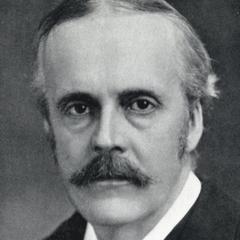
Arthur Balfour
Arthur Balfour

Arthur Balfour was a former Prime Minister of the United Kingdom, born on July 25, 1848, and died on March 19, 1930. He was an important figure in British politics during the late 19th and early 20th centuries, known for his contributions to fiscal and foreign policy. more

You May Also Like

“Through it [Science] we believe that man will be saved from misery and degradation, not merely acquiring new material powers, but learning to use and to guide his life with understanding. Through Science he will be freed from the fetters of superstition; through faith in Science he will acquire a new and enduring delight in the exercise of his capacities; he will gain a zest and interest in life such as the present phase of culture fails to supply.”

“Thus science must begin with myths, and with the criticism of myths; neither with the collection of observations, nor with the invention of experiments, but with the critical discussion of myths, and of magical techniques and practices.”

“Thus science strips off, one after the other, the more or less gross materialisations by which we endeavour to form an objective image of the soul, till men of science, speculating, in their non-scientific intervals, like other men on what science may possibly lead to, have prophesied that we shall soon have to confess that the soul is nothing else than a function of certain complex material systems.”

“To be worthy of the name, an experimenter must be at once theorist and practitioner. While he must completely master the art of establishing experimental facts, which are the materials of science, he must also clearly understand the scientific principles which guide his reasoning through the varied experimental study of natural phenomena. We cannot separate these two things: head and hand. An able hand, without a head to direct it, is a blind tool; the head is powerless without its executive hand.”

“Today, nothing is unusual about a scientific discovery's being followed soon after by a technical application: The discovery of electrons led to electronics; fission led to nuclear energy. But before the 1880's, science played almost no role in the advances of technology. For example, James Watt developed the first efficient steam engine long before science established the equivalence between mechanical heat and energy.”

“Trace Science, then, with Modesty thy guide, First strip off all her equipage of Pride, Deduct what is but Vanity or Dress, Or Learning's Luxury or idleness, Or tricks, to show the stretch of the human brain Mere curious pleasure or ingenious pain.”