Quotessence
Home / Quotes / Quote by Dick Francis

Quote by Dick Francis

“I do a job which I ought to find satisfying, and it leaves me bored and empty." "A diet of milk and honey, when you have teeth," he observed.”
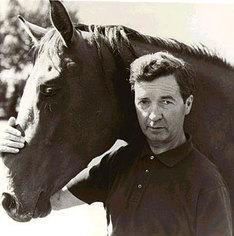
Quote by Dick Francis

Work

For Kicks

Browse quotes and source details for this work. more

Author

Dick Francis
Dick Francis

Dick Francis, born on October 31, 1920, was a renowned jockey from the United Kingdom. He achieved great success in the mid-20th-century British horse racing scene, winning numerous championships. After his retirement as a jockey, he transitioned into a career as a writer, authoring over 40 mystery novels that have been widely appreciated by readers worldwide. more

You May Also Like

“The modern urban-industrial society is based on a series of radical disconnections between body and soul, husband and wife, marriage and community, community and the earth. At each of these points of disconnection the collaboration of corporation, government, and expert sets up a profit-making enterprise that results in the further dismemberment and impoverishment of the Creation. Together, these disconnections add up to a condition of critical ill health, which we suffer in common -- not just with each other, but with all other creatures. Our economy is based upon this disease. Its aim is to separate us as far as possible from the sources of life (material, social, and spiritual), to put these sources under the control of corporations and specialized professionals, and to see them to us at the highest profit. It fragments the Creation and sets the fragments into conflict with one another. For the relief of the suffering that comes of this fragmentation and conflict, our economy proposes, not health, but vast "cures" that further centralize power and increase profits... Only by restoring the broken connections can we be healed. Connection is health. And what our society does its best to disguise from us is how ordinary, how commonly attainable, health is. We lose our health -- and create profitable diseases and dependencies -- by failing to see the direction connections between living and eating, eating and working, working and loving. In gardening, for instance, one works with the body to feed the body. The work, if it is knowledgeable, makes for excellent food. And it makes one hungry. The work thus makes eating both nourishing and joyful, not consumptive, and keeps the eater from getting fat and weak. This is health, wholeness, a source of delight. And such a solution, unlike the typical industrial solution, does not cause new problems.”