Quotessence
Home / Quotes / Quote by Gustav Landauer

Quote by Gustav Landauer

“…it is certain that there are many things to which our language ascribes meaning indicative of a material substance, where simple contemplation indicates that it is largely referential in nature. The conditions or circumstances in our private, political, social and economic lives are such relations; we speak and behave as if these ‘circumstances’ were as rigid as fate, as immutable as a meteor or the trembling earth beneath our feet. In reality these circumstances are convenient shorthand for the way in which we relate to one another. In order to make it yet more comfortable we employ words of foreign origin, so that we might better obscure the source of the noun through the use of a verb. Speaking then of the state, we regard this word as nothing more than a certain civil-legal construction, existing only at the discretion of our will. This concession to comfort is a great sign of our common understanding, which wouldn’t be possible without this materialization of the fluidity and spirituality of relations. Yet, it is a curse for the attainment of knowledge, because we mistake a mere representation for reality; and so it is a major curse for the type of understanding necessary for the establishment of just human relations in society.”

Quote by Gustav Landauer

Author
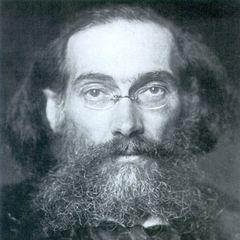
Gustav Landauer
Gustav Landauer

Gustav Landauer was a German anarchist and philosopher born on April 7, 1870. He played a significant role in the German Social Democratic Party and the anarchist movement, particularly during the period of the Bavarian Soviet Republic. Landauer advocated for social change through non-violent means and his ideas and actions had a profound impact on subsequent anarchist movements. more

You May Also Like

“As people find the balance with online and in-person socialization, the social net will enhance their lives and bring greater understanding to the world. People will maintain an ‘inner circle’ of relationships that will primarily be in person, while staying connected with people around the world through various forms of the social net. This will allow the average person to gain a greater understanding of the world from the eyes of other average people from different countries and cultures. Governments will need to adjust to this new world society.” —Tom Golway 2010”

“A new awareness of the integral role that social networks play in long-distance migration goes beyond traditional ‘rational-choice and decision-making models’ drawn from classical economics that content themselves with explaining migration as the outcome of a ‘cost-benefit analysis of the most favorable destination.’ According to recent theory, something more than the push and pull of differential labor markets, hunger, or the search for religious freedom sends people into long-distance emigration. Voluntary migrations do not depend merely on autonomous individuals weighing the costs and benefits of uprooting themselves. Rather, social networks and relationships bind uprooted people on to another like the links in a chain. ‘Chain migration’ is sustained from within, and indeed ‘can become self-perpetuating,’ as ‘each act of migration itself creates the social structure needed to sustain’ further migration. News of another’s good fortune in a distance place, information about unforeseen opportunities, invitations to follow in another’s migratory footsteps, or a familial obligation to do so—the long reach of social relations such as these are the incentive that draws people into exile in other lands and accounts for the enormous scale of some systems of international migration.”

“The key factor is the commitment required to make relationships work. When people are raised in a community that they cannot easily escape, they do what our ancestors have done for millions of years: They learn how to manage relationships, and how to manage themselves and their emotions in order to keep those precious relationships going. There are certainly many online communities that have found ways to create strong interpersonal commitments and a feeling of belonging. but in general, when children are raised in multiple mutating networks where they don't need to use their real names and they can quit with the click of a button, they are less likely to learn such skills.”

“…overprotection in the real world and underprotection in the virtual world-are the major reasons why children born after 1995 became the anxious generation.”

“Gen Z became the first generation in history to go through puberty with a portal in their pockets that called them away from the people nearby and into an alternative universe that was exciting, addictive, unstable, and- as I will show-unsuitable for children and adolescents. Succeeding socially in that universe required them to devote a large part of their consciousness-perpetually-to managing what became their online brand. This was now necessary to gain acceptance from peers, which is the oxygen of adolescence, and to avoid online shaming, which is the nightmare of adolescence. Gen Z teens got sucked into spending many hours of each day scrolling through the shiny happy posts of friends, acquaintances, and distant influencers.”