Quotessence
Home / Quotes / Quote by Paulo Freire

Quote by Paulo Freire

“As one might expect, authoritarianism will at times cause children and students to adopt rebellious positions, defiant of any limit, discipline, or authority. But it will also lead to apathy, excessive obedience, uncritical conformity, lack of resistance against authoritarian discourse, self-abnegation, and fear of freedom.”

Quote by Paulo Freire

Work

Teachers as Cultural Workers: Letters to Those who Dare Teach

This book delves into the profound impact teachers have on society, emphasizing the importance of cultural education and the courage required to challenge traditional teaching methods. more

Author
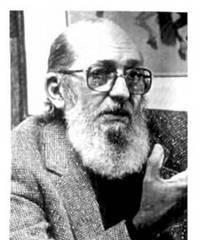
Paulo Freire
Paulo Freire

Brazilian educator, born on September 19, 1921, and died on May 2, 1997. Paulo Freire is renowned for his critical pedagogy theories and contributions to adult education. more

You May Also Like

“No one can learn tolerance in a climate of irresponsibility, which does not produce democracy. The act of tolerating requires a climate in which limits may be established, in which there are principles to be respected. That is why tolerance is not coexistence with the intolerable. Under an authoritarian regime, in which authority is abused, or a permissive one, in which freedom is not limited, one can hardly learn tolerance. Tolerance requires respect, discipline, and ethics.”

“I have never said, as is sometimes believed, or even suggested that lower-class children should not learn the so-called educated norm of the Portuguese language of Brazil. What I have said is that the problems of language always involve ideological questions and, along with them, questions of power.”

“Finally, it is important to make it clear that imagination is not an exercise for those detached from reality, those who live in the air. On the contrary, when we imagine something, we do it necessarily conditioned by a lack in our concrete reality. When children imagine free and happy schools, it is because their real schools deny them freedom and happiness.”

“... teaching cannot be a process of transference of knowledge from the one teaching to the learner. This is the mechanical transference from which results machinelike memorization, which I have already criticized. Critical study correlates with teaching that is equally critical, which necessarily demands a critical way of comprehending and of realizing the reading of the word and that of the world, the reading of text and of context.”

“We must be forewarned that only rarely does a text easily lend itself to the reader's curiosity... the reading of a text is a transaction between the reader and the text, which mediates the encounter between the reader and writer. It is a composition between the reader and the writer in which the reader "rewrites" the text making a determined effort not to betray the author's spirit.”