Quotessence
Home / Quotes / Quote by Dante Alighieri

Quote by Dante Alighieri

Work

The inferno

Written by Dante Alighieri in the early 14th century, The Inferno is the first part of the Divine Comedy, a three-part epic poem. It depicts the journey of the protagonist, Dante, through the nine circles of Hell, each representing a different sin. The work is renowned for its rich imagery, philosophical depth, and its influence on Western literature. more
Author

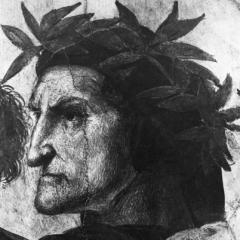
Dante Alighieri
Dante Alighieri

Dante Alighieri, an Italian poet and a pioneer of the Renaissance, is hailed as the father of Italian literature. Born in 1265 and died on September 14, 1321, Dante is best known for his epic poem, 'The Divine Comedy,' which is not only a great literary work but also a profound religious and philosophical treatise. more

You May Also Like

“The passage of time eliminates some of the more intimate details of one's existence. The routine trivia like passing water and shitting and the amount of food and alcohol consumed in the course of daily survival. Sure, there were girls. Lots of'em. It's inevitable.”

“Ahead of me lies the familiar litany: weakening of the heart, hardening of the arteries, increasing brittleness of bones, decreases in kidney filtration rates, lower resistance of the immune system, and loss of memory. The list could be extended almost indefinitely. Evolution seems indeed to have arranged things so that all our systems deteriorate, and that we invest in repair only as much as we are worth.”

“And now I am eking out my days in my corner, taunting myself with the bitter and entirely useless consolations that an intelligent man cannot seriously become anything; that only a fool can become something. Yes, sir, an intelligent nineteenth-century man must be, is morally bound to be, an essentially characterless creature; and a man of character, a man of action - an essentially limited creature. This is my conviction at the age of forty. I am forty now, and forty years - why, it is all of a lifetime, it is the deepest of old age. Living past forty is indecent, vulgar, immoral!”

“After all, I quite naturally want to live in order to fulfill my whole capacity for living, and not in order to fulfill my reasoning capacity alone, which is no more than some one-twentieth of my capacity for living. What does reason know? It knows only what it has managed to learn (and it may never learn anything else; that isn't very reassuring, but why not admit it?), while human nature acts as a complete entity, with all that is in it, consciously or unconsciously; and though it may be wrong, it's nevertheless alive.”